

A commercial roof replacement is one of the largest maintenance investments a property owner will ever make, and getting blindsided by the price tag is a common frustration. Understanding commercial roof replacement cost before you request quotes helps you separate a fair, detailed estimate from one that leaves out critical line items. Since pricing depends on far more than just square footage, it helps to know what’s actually behind the number before you commit to a commercial roofing project. This guide breaks down what property owners in Huntington and surrounding areas can expect to pay in today’s market.
What you’ll learn:
- What drives the total cost of a commercial roof replacement
- The biggest cost factors contractors weigh before quoting a project
- How material choice changes your final price
- What separates a complete estimate from an incomplete one
- How to compare bids accurately across reputable roofing contractors
Why Commercial Roof Replacement Cost Matters to Property Owners
A full roof replacement affects more than just the building’s exterior. It touches insurance coverage, energy efficiency, tenant satisfaction, and the long-term value of the property itself. Property owners who understand what drives replacement pricing are far better equipped to plan for the expense and avoid being caught off guard by a number that seems to come out of nowhere.
- Accurate capital planning: Knowing realistic price ranges helps you budget years in advance rather than scrambling when a roof starts failing.
- Confident contractor comparisons: Understanding the cost drivers lets you tell a thorough estimate apart from a rushed one.
- Protected property value: A properly installed replacement roof protects the building’s structure and can improve its resale or lease value.
- Reduced risk of hidden costs: Knowing what belongs in a complete quote helps you avoid surprise charges once the project is underway.
Replacement decisions also tend to carry more weight than routine maintenance, since the choice of material and contractor made today will affect the building for the next two to three decades. Taking the time to understand pricing upfront, rather than rushing into the first bid that arrives, tends to pay off well beyond the installation itself.
5 Factors That Determine Your Commercial Roof Replacement Cost
Commercial roof replacement pricing depends on a combination of building specifics, material choice, and site conditions, which is why two roofs of similar size can carry very different price tags. Contractors weigh several variables before finalizing a quote, and understanding each one helps explain where the bulk of the cost actually comes from. Below are the five factors that most heavily shape the final number.
1. Roofing Material
Material selection has the single biggest impact on total replacement cost. Across the roofing industry, a commercial roof replacement typically runs between $5.00 and $25.00 per square foot depending on the system chosen, so narrowing down the material early makes it much easier to budget accurately. TPO and EPDM membranes generally sit toward the more affordable end of the spectrum, often landing between $5 and $10 per square foot, while built up bituminous roofing, modified bitumen, and metal systems typically cost more due to the additional layers, labor, and specialized installation techniques involved.
- TPO and EPDM: budget-friendly single-ply options that typically last 20 to 30 years with proper maintenance
- Modified bitumen and built up bituminous roofing: higher material and labor costs due to multiple courses of application
- Metal and standing seam systems: $8 to $15 per square foot installed, with an average lifespan of around 50 years and some standing seam systems lasting 40 to 70 years with minimal upkeep
2. Tear Off and Existing Roof Condition
Removing the existing roof down to the deck adds labor, dumpster fees, and disposal costs that vary depending on how many layers are being removed, typically adding $1.50 to $3.00 per square foot to the overall project. A roof with hidden damage, such as trapped moisture in the insulation or a compromised roof structure, can also require additional repairs once the old material is stripped away, which is why a thorough inspection before the project starts is so valuable. In some cases, a contractor may find rotted decking or damaged framing beneath the surface that wasn’t visible during the initial walkthrough, and addressing that damage properly is essential to the longevity of the new roof, even though it adds to the final invoice.
3. Roof Size and Accessibility
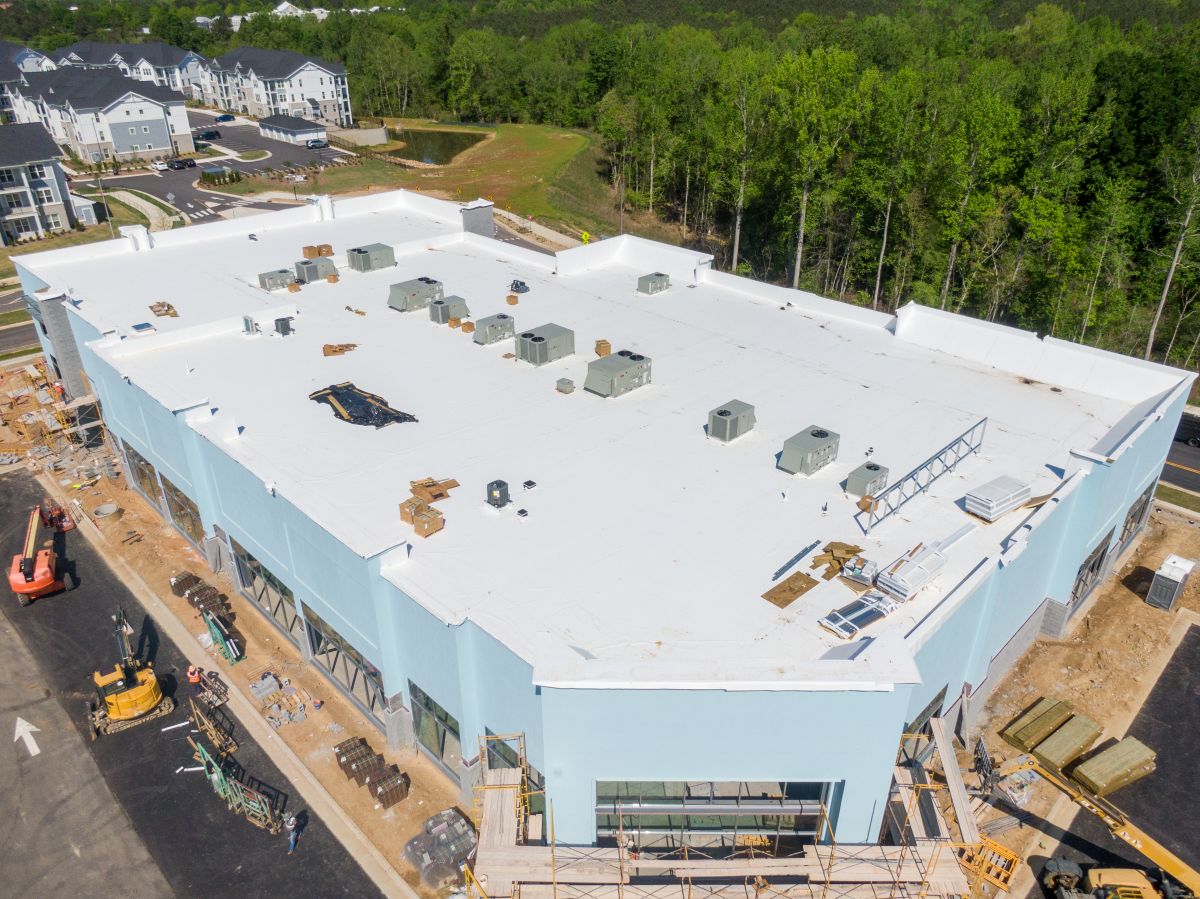
Larger roofs require more material and labor, but access plays just as large a role in total cost. Interestingly, larger roofs often benefit from bulk pricing on materials, which can lower the per square foot cost even as the overall project total climbs. A roof with limited access points, a steep pitch on part of the building, or obstacles like rooftop HVAC units and multiple penetrations takes longer to work around safely, which increases both labor time and the overall price.
4. Insulation and Code Requirements
Many commercial buildings need upgraded insulation to meet current code requirements, especially if the existing roof was installed before more recent energy standards took effect. This upgrade adds cost upfront but generally pays off through lower utility bills and better performance for the life of the new roof.
- Polyisocyanurate insulation: a common, energy-efficient choice for flat and low-slope roofs
- Tapered insulation systems: correct drainage issues but add to material and labor cost
- Code-required R-values: vary by climate zone and can affect the total insulation package needed
5. Labor and Regional Market Conditions
Labor costs shift based on contractor availability, project complexity, and demand across the roofing industry at the time of the project. Labor typically runs $3 to $7 per square foot and can account for roughly 35% to 50% of the total project cost, which is why crew experience and efficiency matter just as much as the price of materials. Property owners in Huntington and surrounding areas may notice seasonal price fluctuations, particularly in the months following major storms when demand for experienced crews rises sharply across the region.
Taken together, these five factors explain why commercial roof replacement estimates vary so widely, even for buildings that look similar from the street. A reputable contractor should walk through each of these factors with you rather than presenting a lump-sum number without context, since a transparent breakdown protects your budget and your expectations going into the project.
What a Complete Estimate Should Include
A commercial roof replacement quote should never be a single line with a total dollar figure. A complete estimate breaks the project into its component parts so property owners can see exactly what they’re paying for and compare bids accurately across different contractors.
- Material and installation costs should specify the exact roofing system being used, including the brand, thickness, and warranty terms, since these details significantly affect both durability and price. A quote that simply says “single-ply membrane” without naming the product leaves too much room for substitution.
- Tear off and disposal costs should be broken out separately, since this line item varies significantly depending on how many existing layers need to be removed and how the debris will be hauled away.
- Insulation and code compliance costs should be itemized, particularly if the project involves upgrading to meet current energy requirements, so you understand exactly why the insulation package costs what it does.
- Flashing, drainage, and accessory work around HVAC units, skylights, and roof penetrations should be listed individually rather than bundled into a vague “miscellaneous” category, since this work is often where unexpected costs hide.
- Permits and inspection fees are easy to overlook but should still appear on the estimate, since these typically add another 1% to 5% to the total project cost depending on the municipality and the scope of work involved.
To put these numbers in perspective, a straightforward 2,600 square foot roof replacement often lands somewhere between $14,300 and $31,200 once material, labor, tear off, and code-related upgrades are all factored in. The exact figure still depends heavily on the material chosen and the condition of the existing structure, which is exactly why an itemized quote matters so much.
A detailed, itemized estimate takes a bit more time to review, but it gives property owners in Huntington and surrounding areas far more confidence that the final invoice will match the original quote rather than climbing once the project is underway.
Repair, Replace, or Overlay: Comparing Your Options
Not every aging roof needs a full tear-off and replacement right away, and understanding the alternatives helps property owners make a financially sound decision rather than defaulting to the most expensive option.
| Option | Typical Cost | Best For |
| Targeted repair | Lowest upfront cost | Isolated damage on a roof under 10-15 years old |
| Restoration | Can save up to 50% versus full replacement | Roofs with widespread wear but a sound structure |
| Overlay | Moderate cost, skips tear off | Roofs with a sound structure and only one existing layer |
| Full replacement | Highest upfront cost | Roofs nearing the end of their expected lifespan or with widespread damage |
An overlay can reduce upfront cost since it skips the tear off entirely, but it also means any hidden damage in the existing roof structure goes unaddressed, which can shorten the lifespan of the new layer on top. A full roof replacement costs more initially but resets the roof’s service life and typically comes with a stronger, longer warranty than a repair or overlay would provide.
Budgeting for any of these options doesn’t always mean paying the full cost upfront. Commercial roof replacements may qualify for IRS Section 179 deductions, and many owners also explore commercial property loans or SBA financing to spread the cost over time. Many contractors also offer structured payment plans for qualified owners, making a full replacement more manageable without delaying a project that shouldn’t wait.
Choosing between these options ultimately depends on the roof’s age, its current condition, and how long the owner plans to hold the property. A contractor who takes the time to explain the tradeoffs, rather than pushing straight toward a full replacement, is generally the one worth trusting with the project. It’s also worth asking how each option affects your building’s warranty, since a full replacement typically resets coverage while a repair or overlay often carries a more limited warranty tied only to the work performed.

Plan Your Project with Maumee River Roofing
Commercial roof replacement cost depends on a wide range of factors, and understanding what goes into a fair, complete estimate puts property owners in a much stronger position to plan and budget with confidence. Whether you’re comparing repair, overlay, and replacement options or simply want a transparent breakdown of what a new roof will cost, having the right information from the start protects your investment. Maumee River Roofing has helped property owners throughout Huntington and surrounding areas navigate exactly these decisions, providing detailed inspections and honest, itemized pricing before any work begins. If you’re ready to get a clear, accurate quote for your building, contact us today to schedule an inspection with Maumee River Roofing.