

When a commercial roof starts showing its age, property owners face a choice that affects both the project budget and the building’s long-term performance. Weighing roof recover vs tear off requires looking past the upfront price tag to understand what’s actually happening beneath the surface of the existing roof. Since choosing the wrong approach can mean paying for repairs twice, it helps to understand the tradeoffs before committing to a commercial roofing project for your building, especially given how much variation exists from one roof to the next. This guide breaks down how property owners in Fort Wayne and surrounding areas can decide which option fits their specific situation.
What you’ll learn:
- The key differences between a roof recovery and a full tear-off
- The factors that determine which option makes sense for your building
- The advantages and drawbacks of each approach
- How cost, disruption, and long-term value compare between the two
- When a recover simply isn’t an option, regardless of budget
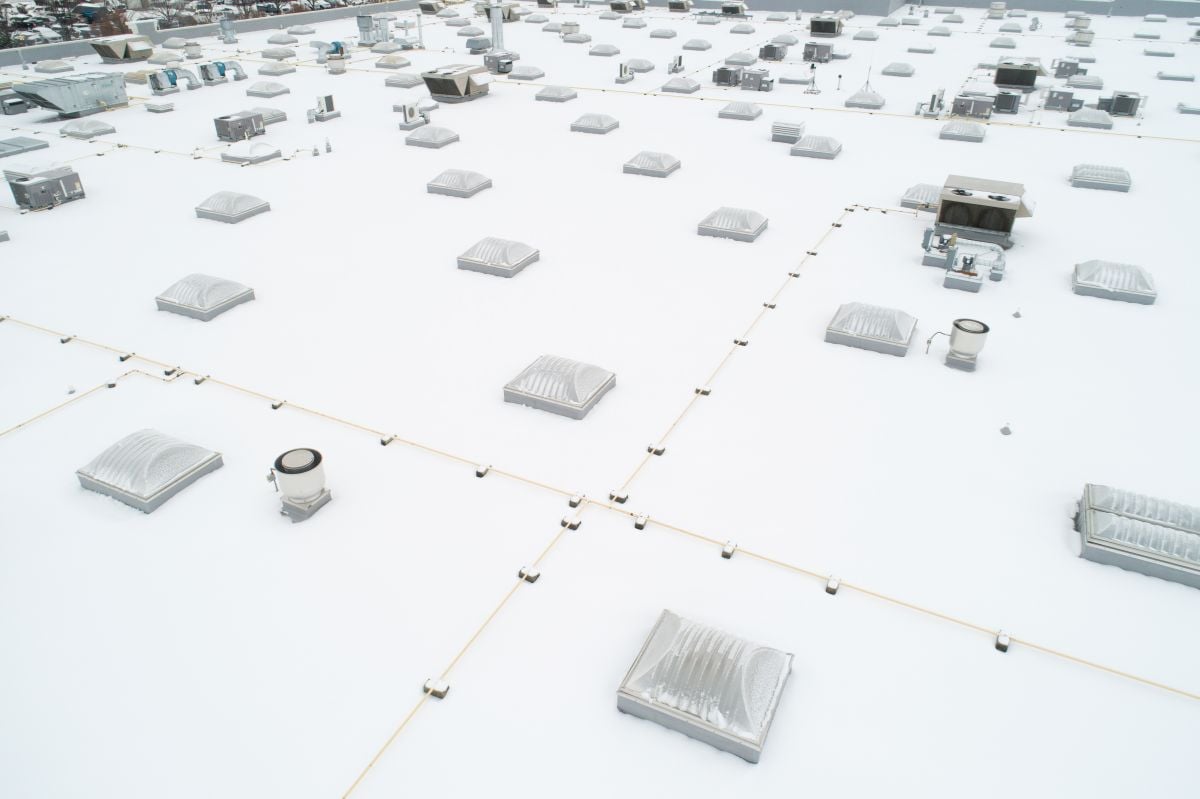
Why the Recover vs Tear Off Decision Matters
Choosing between a recover and a tear off affects far more than the upfront invoice. The decision influences how long the new roof will last, whether hidden damage gets addressed or buried, and how much disruption the project causes to daily operations.
This decision also carries legal and financial weight beyond the roof itself, since building codes, insurance requirements, and future property sales can all hinge on whether a roof was properly torn off and inspected or simply covered with a new layer. A recover that later needs correction can end up costing more in total than choosing the right approach from the start.
- Long-term performance: The right choice protects the building for decades, while the wrong one can lead to premature failure and repeat expenses.
- Hidden damage discovery: A tear off exposes the roof deck fully, while a recover leaves existing conditions covered rather than corrected.
- Budget impact: A recover typically costs less upfront, but choosing it under the wrong conditions can lead to a more expensive tear off later.
- Project timeline: Recovers are generally faster to complete, which matters for businesses that can’t tolerate lengthy construction disruptions.
Understanding these stakes upfront helps property owners in Fort Wayne and surrounding areas approach the decision with realistic expectations rather than defaulting to whichever option seems cheapest on paper. A well-informed decision at this stage sets the tone for the entire project, from the initial inspection through the final walkthrough.
3 Factors That Determine Which Option Is Right for You
The choice between a recover and a tear off isn’t purely about preference or budget, since certain conditions make one option clearly more appropriate than the other. Understanding these three factors helps property owners approach the decision with a clear framework rather than guessing, since each one can independently rule out a recover regardless of what the budget allows. Below are the three considerations that matter most.
1. Number of Existing Roof Layers
Most building codes limit how many roofing layers a structure can carry, and many jurisdictions cap that number at two. If your roof already has one or more layers installed, a recover may not be permitted at all, which makes a tear off the only compliant option regardless of cost preference. Property owners are sometimes surprised to learn how many layers already exist on their roof, since previous owners or past contractors may have installed a recover of their own without keeping detailed records. Warning signs of an overloaded roof, such as sagging or creaking under normal foot traffic, can indicate that additional layers have already pushed the structure closer to its weight limit than expected.
- A single existing layer: often eligible for a recover, depending on condition
- Two or more existing layers: typically requires a full tear off due to code restrictions
Any of these warning signs should prompt an inspection before adding yet another layer to the roof, since continuing to build weight on a structure already showing stress only increases the risk of a more serious structural problem.
2. Condition of the Roof Deck
A recover only makes sense if the underlying deck is structurally sound, since the new membrane is installed directly over the existing surface. Signs of rot, sagging, or water damage in the deck mean a recover would simply seal in problems that will continue to worsen beneath the new layer, often without any visible indication from above until the damage becomes severe.
A thorough inspection, sometimes including core sampling, helps determine whether the deck can safely support a recover or whether a tear off is necessary to properly assess and repair the structure underneath. Skipping this step to save on inspection costs can end up being one of the more expensive shortcuts a property owner takes on a roofing project.
3. Local Building Code Requirements
Beyond layer limits, some municipalities require specific insulation upgrades or wind uplift standards that can only be verified and installed during a full tear off. A recover may not allow inspectors to confirm compliance with current code, which can create complications during permitting or future property transactions. Buyers and their inspectors during a property sale often ask specifically whether a roof has ever been recovered, since that history can affect financing, insurance rates, and negotiated repair credits.
Taken together, these three factors explain why the recover versus tear off decision often isn’t as flexible as it first appears. A qualified contractor should assess all three before recommending either path forward, since skipping this evaluation risks locking in a problem rather than solving it. An honest assessment upfront almost always costs less than discovering a hidden issue years into a recover’s expected lifespan.
Weighing the Advantages and Drawbacks of Each Approach
Both recovery and tear off projects come with distinct tradeoffs, and understanding these in detail helps property owners set realistic expectations for cost, timeline, and long-term performance. Neither option is universally better, since the right choice depends entirely on the specific conditions present on your building.
- Recover advantages include lower upfront cost, faster installation, and less disruption to daily business operations, since there’s no need to remove and dispose of the existing roofing material. A recover can save approximately 25% in upfront costs compared to a tear off, with overlays typically running between $250 and $350 per square, or roughly $2.50 to $3.50 per square foot.
- Recover drawbacks include the inability to inspect or repair the deck underneath, added weight on the structure from the additional layer, and code restrictions that may make it unavailable depending on the building’s roofing history. Overlays can also trap heat and moisture between layers, which accelerates deterioration of both the new material and whatever is underneath it.
- Tear off advantages include a full roof inspection and repair of the roof deck, compliance with current building codes, and typically a stronger, longer warranty since the new system starts from a clean surface. Many manufacturers only provide full warranty protection for tear-offs, since installing new material over existing layers can void coverage entirely if underlying problems surface later.
- Tear off drawbacks include a higher upfront cost, generally running $1.20 to $4.00 per square foot just for removal, along with a longer project timeline that typically adds several days compared to a recover. Businesses that operate on tight schedules sometimes need to plan tear off projects around slower periods to minimize the impact on customers or tenants.
Weighing these tradeoffs against your building’s specific condition and your tolerance for upfront cost versus long-term risk helps clarify which approach actually serves your situation best, rather than defaulting to whichever option a roofing contractor happens to recommend first.
Cost, Disruption, and Value: A Side-by-Side Comparison
Beyond the technical factors that determine eligibility, property owners often want a clearer picture of how these two options compare in practical, everyday terms. Seeing the tradeoffs laid out side by side makes it easier to weigh what matters most for a specific building and budget.
| Consideration | Roof Recover | Full Tear Off |
| Upfront cost | Lower, saves roughly 25% | Higher |
| Typical lifespan | Around 16 years | 20 to 30 years with proper maintenance |
| Project timeline | Shorter | Longer, generally several days more |
| Deck inspection | Not possible | Full inspection included |
| Code compliance | May not meet current standards | Verified during installation |
| Warranty strength | Often more limited | Typically stronger and longer |
| Best suited for | Roofs with one sound existing layer | Roofs with multiple layers or deck damage |
This comparison makes clear why the decision shouldn’t rest on cost alone, since a recover’s lower price tag only represents good value when the underlying conditions actually support it. A completed tear off can also add measurable resale value to a commercial property compared to a roof with an aging overlay, since buyers and their inspectors tend to view a documented tear off as a stronger long-term asset. Property owners in Fort Wayne and surrounding areas who prioritize long-term reliability over the lowest possible bid often find that a tear off delivers better value once the full lifecycle of the roof is considered, particularly for buildings they plan to own for many years to come.
Make the Right Call with Maumee River Roofing
Deciding between a roof recover and a tear off requires an honest assessment of your building’s existing conditions, not just a comparison of price tags. Getting this decision right protects your investment for decades, while getting it wrong can mean paying for the same repair twice. Maumee River Roofing has helped property owners throughout Fort Wayne and surrounding areas evaluate their roofs honestly, recommending whichever approach actually fits the building’s condition rather than pushing the more profitable option. An inspection that includes a look at layer count, deck condition, and code compliance gives you the full picture before any decision gets made, rather than leaving you to guess at what’s happening beneath the surface. If you’re ready to find out whether your roof qualifies for a recover or needs a full tear off, contact us today to schedule an inspection with Maumee River Roofing.