

Noticing water leaking from ceiling is more than just a visual nuisance—it’s a warning sign. Whether it’s a slow drip or sudden stain, these leaks often mean something deeper is wrong, from hidden roof damage to failing pipes. When caught early, the right repairs can stop the spread before it leads to rot, mold, or electrical hazards. Understanding what’s going on above your ceiling starts with how your roof is layered, so take a closer look at this breakdown of roof decking and the role it plays in moisture control.
Here’s what you’ll learn in this blog:
- Why ceiling leaks require urgent attention
- 7 clear signs your ceiling may be compromised
- The most common causes of leaks from above
- How to stop damage from spreading in your home
- What homeowners in Fishers and surrounding areas should watch out for
Why Ceiling Leaks Are a Bigger Deal Than They Look
Ceiling leaks are one of the clearest signs something is going wrong behind your walls or above your roofline. Unfortunately, by the time water shows up indoors, damage has usually been developing for some time.
- Protects the structure of your home: Water weakens drywall, rots wood framing, and can lead to ceiling collapse if left unaddressed.
- Prevents electrical hazards: Leaks near lights or fans can cause shorts, fire risks, and system-wide issues with your wiring.
- Stops the spread of mold and mildew: Moisture breeds mold in just 24–48 hours, especially in poorly ventilated ceiling spaces or attics.
- Reduces repair costs: Acting fast means a quick patch or localized fix—instead of replacing entire ceiling panels or roof sections.
- Preserves your insulation and HVAC efficiency: Wet insulation doesn’t perform well, leading to drafty rooms and rising utility bills.
7 Signs You Have a Ceiling Leak (and It’s Time to Act Fast)
These warning signs often show up long before a drip lands in a bucket. Catching them early is your best chance to limit damage and avoid expensive repairs.
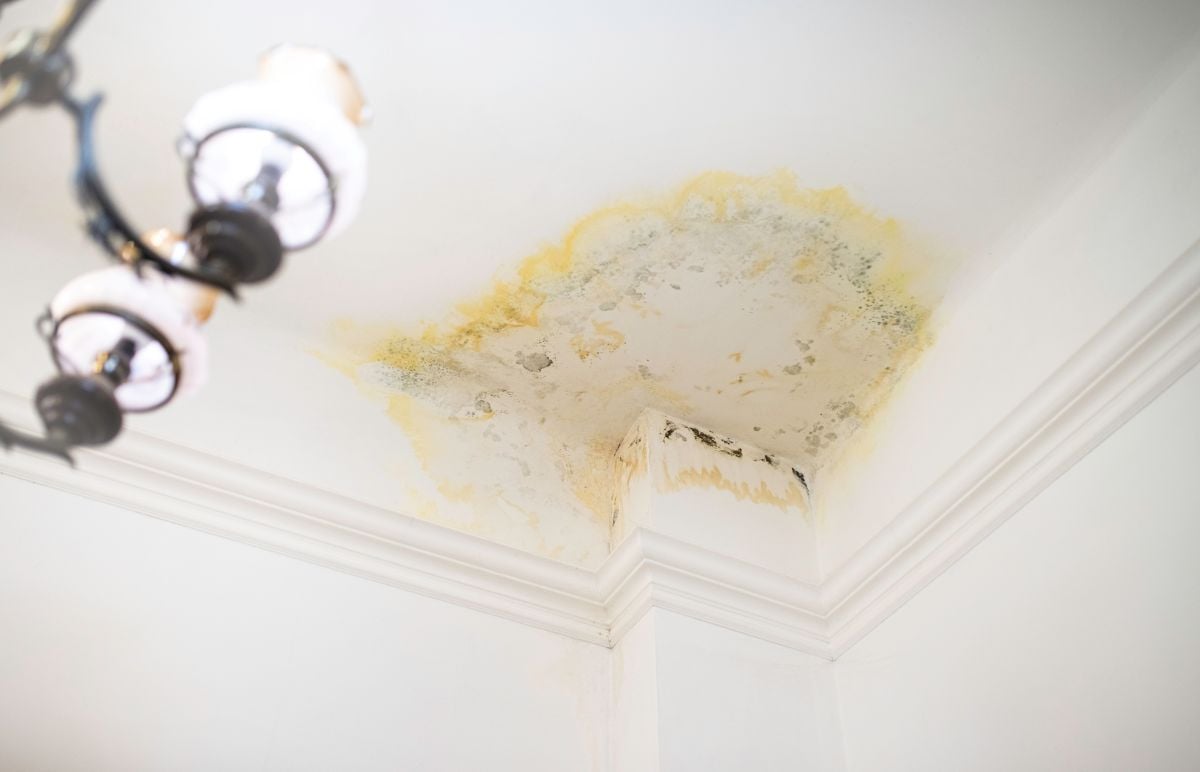
1. Yellow or Brown Stains on the Ceiling
Ceiling stains are one of the most common symptoms of a leak, often appearing as discolored rings or uneven patches.
- Most visible on white or light-colored ceilings
- Often caused by minerals or debris in the leaking water
- Tend to expand over time with each rain or plumbing use
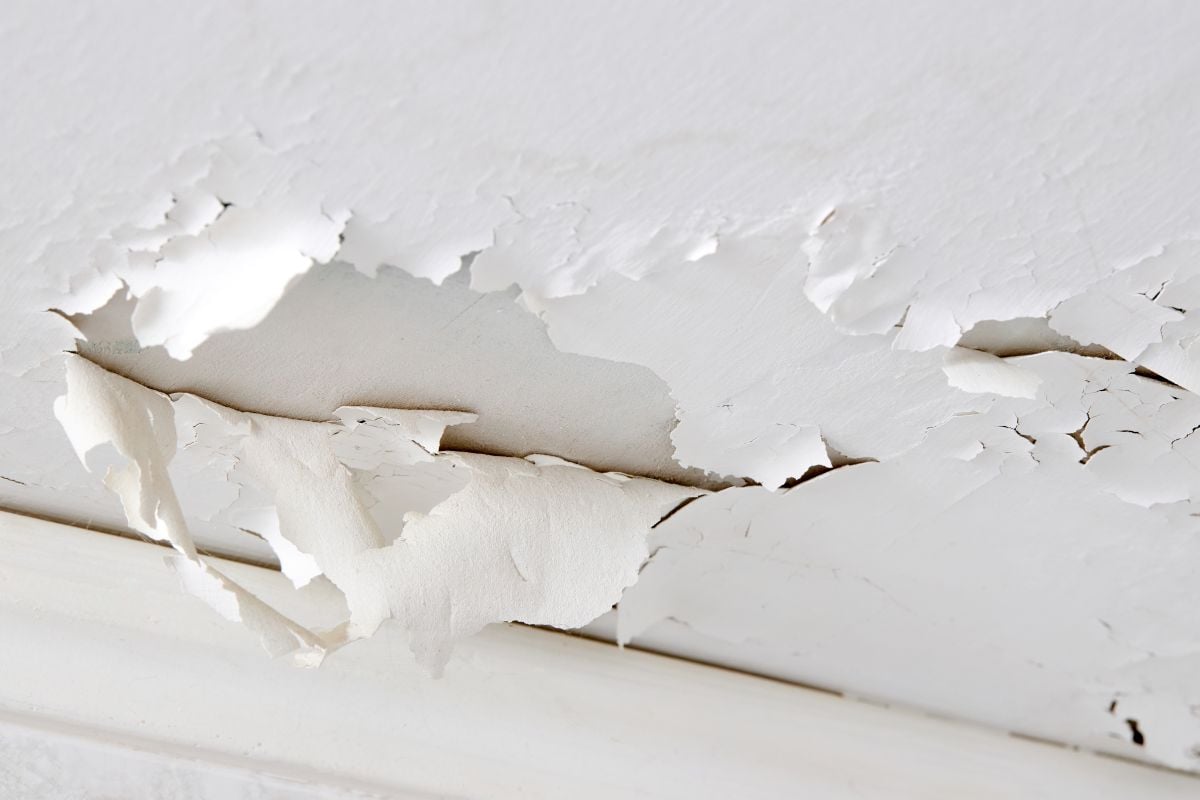
2. Bubbling or Peeling Paint
Water trapped behind paint causes it to lose its grip, leading to bubbling, blistering, or peeling.
- May first appear near corners, seams, or ceiling fixtures
- A sign of trapped moisture, even if the source isn’t visible
- Often confused with high humidity issues in kitchens or bathrooms
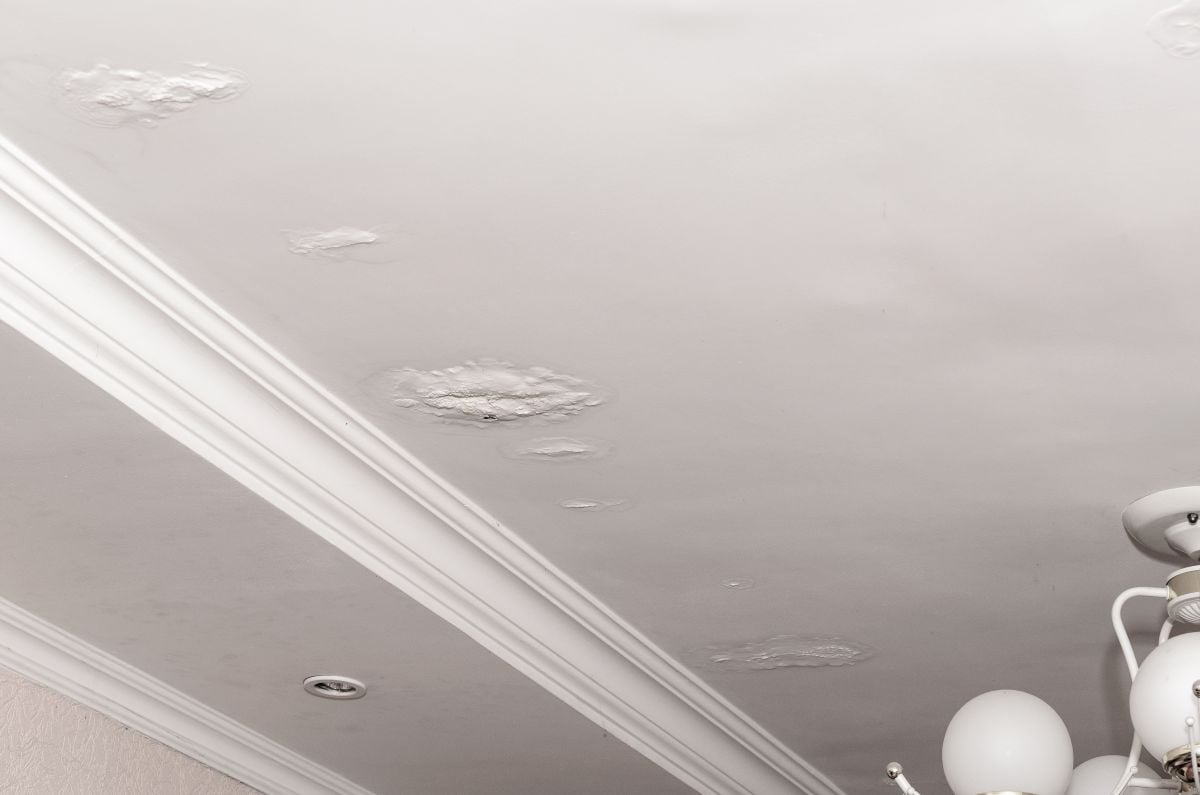
3. Sagging or Soft Spots in the Ceiling
A ceiling that begins to dip or bow indicates soaked drywall or wood framing underneath.
- May feel spongy or soft to the touch
- Can result in collapse if left untreated
- Typically means the leak has been ongoing for a while
4. Dripping Water or Puddles
Once water makes it past your ceiling’s material layers, it will often start to drip or pool.
- May occur intermittently during or after rainfall
- Look for water trails or wet spots on walls as well
- Dripping usually isn’t directly below the source due to water travel
5. Mold or Mildew Smell
Even if you can’t see visible water, a musty odor in the room often signals hidden moisture.
- Mold behind drywall or insulation emits a damp, earthy smell
- Smell is often stronger in the morning or after a storm
- Common in areas with poor ventilation or past leak issues
6. Visible Mold Growth
If water has been present long enough, mold may appear in dark spots or fuzzy patches on the ceiling.
- Often found near air vents or around recessed lighting
- Mold may be green, black, or white in color
- Indicates ongoing moisture and a potential health risk
7. Unexpected Increase in Energy Bills
Wet insulation can no longer effectively hold in warm or cool air, causing HVAC systems to work harder.
- Higher energy use without any changes in thermostat habits
- May also notice uneven temperatures between rooms
- Often goes unnoticed until the leak is fixed and insulation replaced
4 Things That Cause Cause Ceiling Leaks in Homes
A leak from your ceiling doesn’t always start from above. While roofing issues are common culprits, several other systems in your home could be to blame.
1. Roof Damage
In Fishers and surrounding areas, roof-related leaks are often tied to seasonal weather patterns.
- Missing shingles due to windstorms or hail
- Cracked or loose flashing around vents, chimneys, or skylights
- Clogged gutters causing water to back up under roof edges
- Ice dams that trap melting snow on the roof surface
2. Plumbing Issues
Leaks from pipes are especially common in homes with bathrooms, laundry rooms, or kitchens on upper floors.
- Worn pipe joints or seals that drip slowly over time
- Burst pipes from freezing temperatures in uninsulated spaces
- Leaking toilets or shower pans that seep between floorboards
3. HVAC System Problems
Cooling systems, particularly in attics, can produce unexpected moisture buildup.
- Blocked or disconnected condensate drain lines
- Condensation on uninsulated ductwork
- Malfunctioning humidifiers that over-saturate nearby materials
4. Ventilation and Attic Issues
An improperly ventilated attic can trap heat and moisture, creating condensation that mimics a leak.
- Poor attic airflow that encourages mold growth
- Wet insulation that drips down onto ceilings
- Animal nests that displace insulation or block vents
What To Do When You See Water Leaking From Your Ceiling
When a leak shows up, quick response matters. Here’s what to do immediately to prevent further damage.
Contain the Water
- Use a bucket, towel, or plastic sheeting to catch drips
- Move furniture or rugs out of the area
- If bubbling occurs, pierce the lowest point with a screwdriver to relieve pressure and avoid spread
Turn Off Power (If Necessary)
- If water is near lights or outlets, cut power at the breaker
- Avoid touching any switch or fixture in the affected area
Inspect the Attic or Upper Floor
- Check for wet insulation, pooling water, or obvious gaps
- Look at the roof deck from inside, especially around flashing and vents
- Use a flashlight to spot slow drips or dark, damp wood
Document the Damage
- Take photos and note when the leak was first noticed
- Track changes during rainfall or plumbing use
- These details help with insurance claims or professional evaluations
Call a Professional Right Away
- Local roofers or contractors can trace the source of the leak
- Don’t delay—waiting risks further damage and mold development
- A professional will inspect the roof, attic, and interior ceiling layers

How to Prevent Future Ceiling Leaks
Once you’ve addressed the current problem, it’s time to think long-term. These steps can help prevent new leaks from forming.
- Have your roof inspected annually—especially before and after winter
- Clear your gutters in spring and fall to prevent overflow
- Seal all roof penetrations like vents, skylights, and chimneys with proper flashing
- Update attic insulation and airflow to reduce moisture buildup
- Insulate pipes and ductwork in attic or crawl spaces to avoid condensation
- Fix plumbing issues immediately before slow drips create larger problems
Why Ceiling Leaks Are Common in Fishers Homes
Homes in Fishers and surrounding areas often face unique challenges when it comes to moisture intrusion. Understanding your regional risks helps you prepare better.
Local Risk Factors:
- High wind storms in spring and summer loosen shingles and flashings
- Cold winters cause freeze/thaw cycles that damage roof materials
- Mature trees drop leaves that clog gutters and block drainage
- Older homes often have worn-out plumbing or insulation from the original build
Whether your home is newer construction or decades old, proactive maintenance and regular inspections are key to catching leaks before they do serious damage.
Stop the Leak Before It Spreads
A ceiling leak is never just a surface-level issue. It’s often the last warning before more serious damage takes hold inside your home. Acting quickly can mean the difference between a minor repair and a major renovation. At Maumee River Roofing, we’ve helped homeowners in Fishers and surrounding areas identify leaks, repair damaged roofs, and prevent future water intrusion with proactive solutions.
If you’re seeing stains, dripping water, or soft spots in your ceiling, don’t wait. Contact us today to schedule a roof or leak inspection. Maumee River Roofing is here to protect your home from the top down.