

Your roof is one of the largest capital investments tied to your building, yet most owners only think about it when a leak appears. Knowing how long does a commercial roof last helps you budget years ahead, time a commercial roof replacement on your terms, and avoid paying for emergency fixes. The answer depends heavily on the material type overhead, along with installation quality and upkeep. If you are weighing options for a new building or an aging one, exploring the right low-slope system for your property is a smart first step.
Quick takeaways from this guide:
- Typical lifespans for seven common commercial roofing systems
- The conditions that shorten or extend roof life
- Warning signs that a roof is nearing the end of its useful life
- A side-by-side material comparison for easy planning
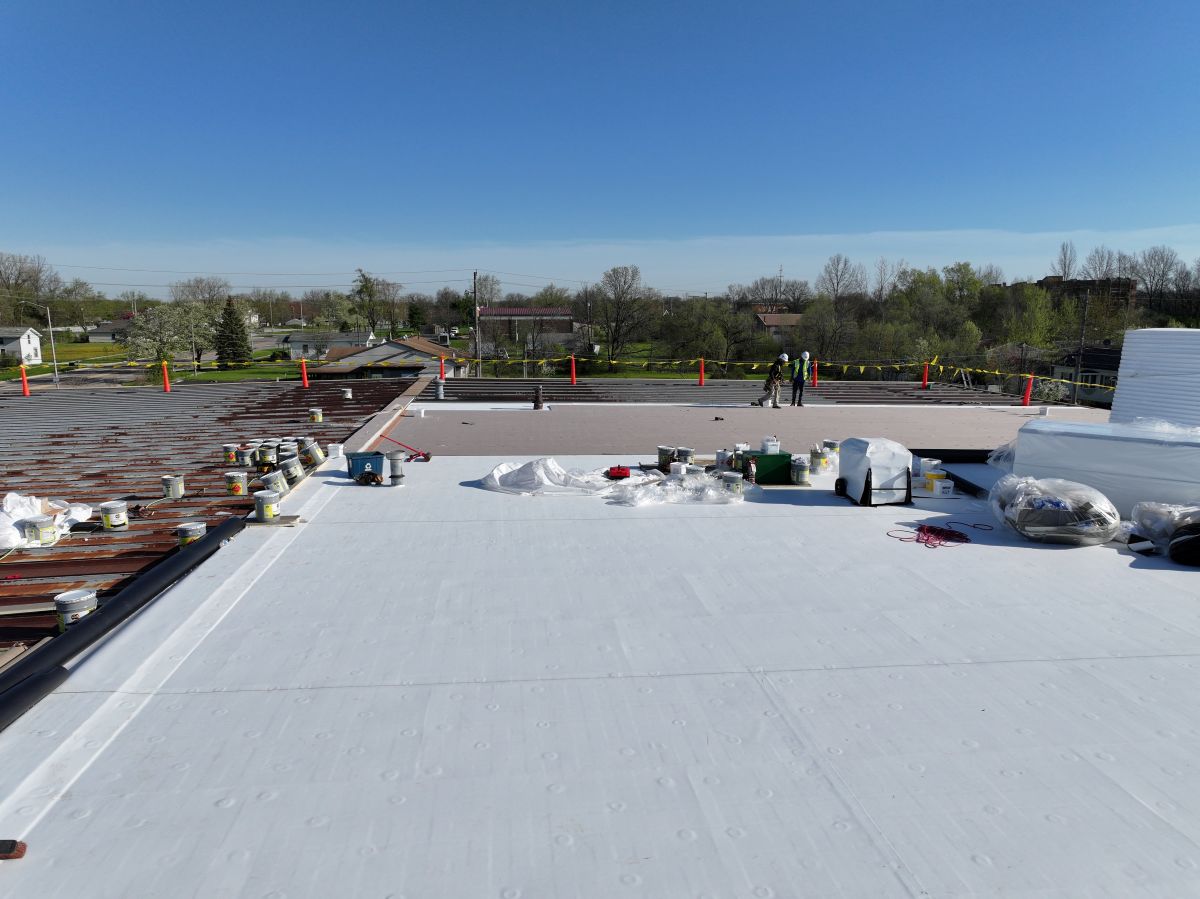
Why Knowing Your Roof’s Lifespan Pays Off
A commercial roof rarely fails overnight. It wears down gradually, and owners who understand their commercial roof life expectancy can plan instead of react. That knowledge protects your budget, your tenants, and the inventory or equipment inside the building.
Material choice is the biggest variable, and longevity can differ sharply even between two membranes that look similar on paper. Understanding those differences brings several practical advantages:
- Smarter capital planning: When you know a roof has roughly eight years left, you can set money aside gradually rather than absorbing a sudden six-figure expense.
- Better material decisions: Comparing the average roof lifespan of each roof type against its upfront cost shows you the true cost per year of service, which is often more useful than the initial price tag.
- Fewer emergency repairs: Scheduling preventative maintenance around a roof’s age catches open seams and damaged flashing before they turn into structural damage or interior water stains.
- Stronger property value: Buyers, lenders, and insurers all ask about roof age, and a well-documented roof with remaining service life makes a building easier to sell or refinance.
For building owners in Auburn, IN and surrounding areas, this planning matters even more. Northeast Indiana winters bring heavy snow, ice, and repeated freeze-thaw cycles, while summer storms add heavy rain that tests every seam and fastener on a flat roof.
7 Commercial Roofing Materials and How Long Each One Lasts
Each of these different types of roofing systems has its own strengths, weaknesses, and realistic service life. The ranges below assume professional installation and regular maintenance, so a neglected roof may fall short while a properly maintained one can exceed them.
1. EPDM Rubber: 25 to 30+ Years
EPDM is a synthetic rubber membrane that has protected flat roofs for decades. It handles extreme temperature swings well, stays flexible in cold weather, and is relatively easy to patch when timely repairs are needed. Its main weakness is puncture resistance, so buildings with heavy rooftop foot traffic need walkway pads.
- Performs very well in cold climates
- Seams are the most common failure point as the roof ages
2. TPO: 15 to 30 Years
TPO is a white, heat-welded single-ply roof membrane known for being energy efficient and forming strong seams. Lifespan varies widely with membrane thickness and installation quality. A thicker 60 or 80 mil sheet installed by an experienced crew typically lasts far longer than a thin, budget installation.
3. PVC: 20 to 30 Years
PVC membranes share many traits with TPO but offer better resistance to chemicals, grease, and oils. That makes PVC a favorite for restaurants, food processing plants, and manufacturing facilities where exhaust or spills reach the roof surface. Heat-welded seams give it excellent long-term water resistance.
4. Modified Bitumen: 15 to 20 Years
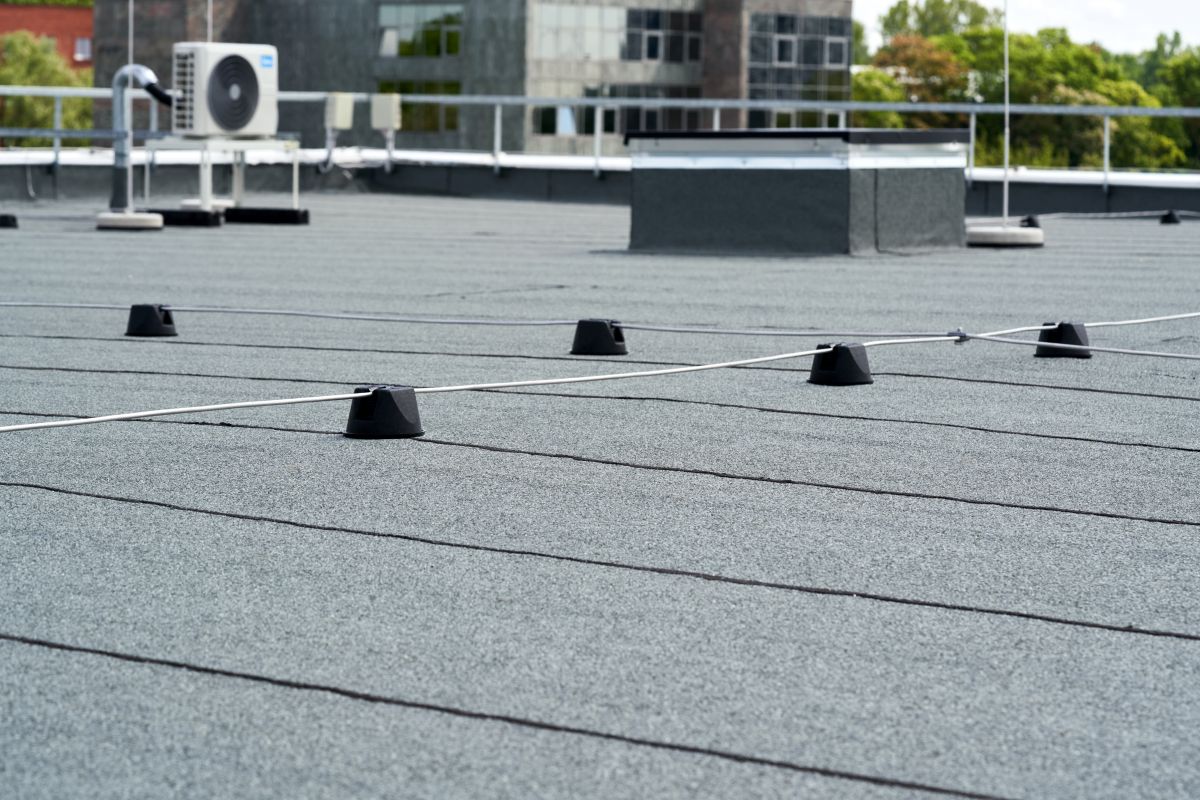
Modified bitumen is an asphalt-based system reinforced with polymers and applied in layers. It is durable, handles foot traffic well, and is often a cost-conscious choice for smaller commercial buildings.
- Granule surfaces protect against UV damage
- Shorter lifespan than most single-ply membranes
5. Built-Up Roofing: 20 to 30 Years
Built-up roofing, often called tar and gravel, uses alternating layers of bitumen and reinforcing felts topped with gravel. Its multiple layers create redundancy, so a single surface defect rarely causes a leak. The tradeoff is weight, since the structure must support a heavy roof assembly.
6. Metal Roofing: 40 to 60 Years
Standing seam metal is the long-distance runner of commercial roofing, outlasting asphalt shingles by decades. It sheds snow easily, resists fire, and stays low maintenance beyond fastener and sealant checks. Metal works best on low-slope roofs with enough pitch to drain, rather than truly flat surfaces.
- Highest upfront cost, lowest cost per year of service
- Panels can often be recoated to extend life further
7. Spray Polyurethane Foam: 20 to 30 Years
Spray foam is applied as a liquid that expands into a seamless, insulating layer, then sealed with a protective coating. The foam itself can last decades, but the top coating typically needs renewal every 10 to 15 years. With consistent recoating, an SPF roof’s service life can extend well beyond its original warranty.
Comparing these ranges side by side shows why there is no single answer to the lifespan of a commercial roof. A modified bitumen roof and a metal roof installed the same year could reach the end of their service lives decades apart.
What Shortens or Extends a Commercial Roof’s Life
Material sets the baseline, but conditions on and around the roof decide whether you reach the high or low end of that range. Two identical membranes on neighboring buildings can age very differently depending on these factors.
- Installation quality: Poorly welded seams, thin insulation attachment, and rushed flashing details are the leading cause of early roof failure, no matter how good the material is.
- Drainage and standing water: Water that sits for more than 48 hours after rain accelerates membrane breakdown, adds weight, and finds its way into small defects. Clear drains, scuppers, and gutters, along with proper slope, matter enormously.
- Climate and severe weather: UV rays, hail, high winds, and freeze-thaw cycles all stress roofing materials. Snow that lingers on a flat roof can also reveal weak seams during spring melt.
- Rooftop traffic and equipment: HVAC technicians, satellite installers, and other contractors walking the roof cause punctures and wear around units and penetrations.
- Maintenance habits: Twice-yearly inspections, debris removal, and prompt roof repair of small issues can add years to a commercial roof’s lifespan.
The good news is that most of these factors are within your control. Choosing a skilled installer and committing to routine inspections are the two most effective ways to push your roof toward the long end of its expected lifespan.
Planning Around Your Roof’s Remaining Service Life
Knowing average lifespans is helpful, but the real value comes from applying that knowledge to your own building. A simple comparison and a short list of warning signs can tell you whether you are in maintenance mode or replacement mode.
| Material | Typical Lifespan | Maintenance Needs | Best Fit |
| EPDM | 25 to 30+ years | Low to moderate | Cold climates, large buildings |
| TPO | 15 to 30 years | Low | Energy-conscious buildings |
| PVC | 20 to 30 years | Low | Restaurants and industrial sites |
| Modified Bitumen | 15 to 20 years | Moderate | Smaller budgets, high foot traffic |
| Built-Up | 20 to 30 years | Moderate | Buildings needing layered redundancy |
| Metal | 40 to 60 years | Low | Long-term owners, low-slope roofs |
| Spray Foam | 20 to 30 years | Recoat every 10 to 15 years | Irregular roofs, insulation upgrades |
Signs Your Roof Is Nearing the End
Even with the best care, every roof eventually wears out. Watch for these signals that your system may be approaching retirement:
- Recurring leaks or water stains in different locations
- Shrinking, cracking, or blistering membrane
- Open seams pulling apart across large sections
- Wet insulation or mold found when roofing professionals inspect beneath the membrane
- Rising energy bills with no other explanation
Spotting one of these issues usually calls for needed repairs, but several together often mean the roof should be replaced. Property owners in Auburn, IN and surrounding areas get a better idea of their options from a professional assessment that compares the roof’s age with its actual condition.
Frequently Asked Questions About How Long a Commercial Roof Lasts
Commercial property owners often ask similar questions when planning for the future of their roofs. Here are straightforward answers to the most common ones.
What is the longest-lasting commercial roofing material?
Metal roofing typically lasts the longest, often 40 to 60 years with proper care. Among membrane systems, EPDM and PVC generally offer the longest life expectancy.
Does a roof warranty tell me how long my roof will last?
Not exactly. Warranties usually run 10 to 30 years and cover specific defects, but a well-maintained roof can outlast its warranty while a neglected one may fail before the roof reaches its expected age.
Can a roof coating extend the life of my commercial roof?
Yes. A properly applied coating on a structurally sound roof can add 10 to 15 years of service by sealing small cracks and blocking UV damage.
How often should a commercial roof be inspected?
Twice a year is ideal, typically in spring and fall, along with a quick check after any major storm. Regular inspections are the easiest way to catch problems early.
Does the Indiana climate shorten roof life?
It can. Freeze-thaw cycles, heavy snow loads, and summer storms put extra stress on seams and flashing, which makes routine maintenance especially important for buildings in Auburn, IN and surrounding areas.
If your roof’s age is unknown or your records are incomplete, a professional inspection can estimate remaining service life with surprising accuracy. That baseline makes every future decision easier.
Get More Years Out of Your Commercial Roof
Understanding your roof’s expected lifespan turns an unpredictable expense into a manageable plan. Whether your building has a newer single-ply membrane or a decades-old built-up system, knowing where it stands helps you protect your investment and avoid surprises. The experienced team at Maumee River Roofing helps business owners and property managers in Auburn, IN and surrounding areas evaluate roof condition, plan maintenance, handle roof replacement, and choose long-lasting systems that fit their budgets. If you want a clear picture of how much life your roof has left, contact us today to schedule an inspection.