

Most homeowners think about gutters when it rains, but few think about what happens at the corners, valleys, and downspouts where water volume surges and overflow becomes almost inevitable. Gutter splash guards are simple, low-cost additions to your gutter system that address exactly these problem areas before water finds its way into your foundation, siding, or landscaping. If you want a gutter system that actually performs during heavy storms, understanding how a complete, properly configured drainage system keeps your home protected is a great place to start.
What you’ll learn:
- What gutter splash guards are and where they are installed
- The five key ways splash guards protect your home from water damage
- Which locations on your home are most vulnerable without them
- How splash guards compare to other gutter accessories and gutter upgrades
- What to look for when evaluating whether your home needs splash guards
Where Gutter Systems Fail Without Splash Guards
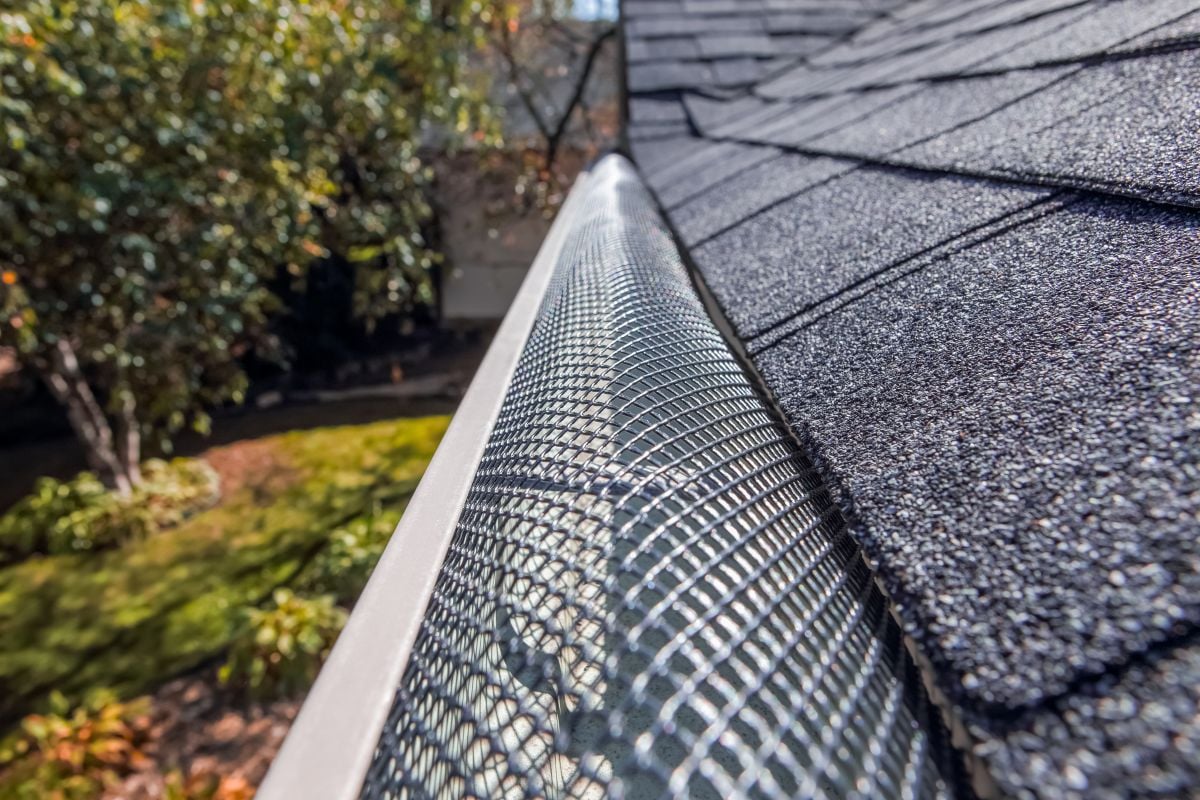
Gutters are designed to collect water running off your roof and channel it away from your home’s foundation. In theory, this is straightforward. In practice, the points where roof planes meet, where valleys dump concentrated water, and where corners force water to change direction all create surges that a standard gutter channel cannot always contain. Water that overshoots the gutter at these locations does not simply fall harmlessly to the ground.
When water exits the gutter system at the wrong point, it lands against your foundation, soaks into your mulch beds, and saturates the ground closest to your basement or crawl space wall. Homeowners in Huntertown, IN and surrounding areas know that heavy rain events can push a gutter system past its capacity quickly, and once water starts escaping at a corner or valley, it tends to follow the same path every time, compounding the damage with each storm.
- Foundation protection: Water that consistently lands at the base of your foundation walls is the leading cause of basement moisture problems, efflorescence, and over time, foundation cracking. Splash guards direct overflow away from these critical areas before saturation can begin.
- Siding and fascia preservation: When water overshoots a gutter at an inside corner or valley, it often runs directly down the fascia board and behind the siding. Rot in fascia boards, peeling exterior paint, and mold or mildew growth on siding are predictable consequences of unaddressed gutter overflow at problem locations.
- Landscaping and soil integrity: Concentrated water at the base of a home erodes topsoil, kills plants that cannot tolerate saturation, and washes away the grading that keeps water sloping away from the structure. Splash guards redirect this water before it reaches the landscape beds directly against the house.
- Basement and crawl space dryness: The connection between surface water management and subsurface moisture is well-established. Keeping water away from the foundation perimeter during rain events is one of the most effective steps a homeowner can take to prevent moisture from migrating through foundation walls.
Every one of these failure points is preventable with proper gutter accessories installed in the right locations. Splash guards are among the simplest, most inexpensive, and easiest to install of those accessories, and they address problems that would otherwise require far costlier solutions later.
5 Ways Gutter Splash Guards Protect Your Home From Water Damage
Splash guards work by containing or redirecting water at the specific points in a gutter system where overflow is most likely. Here is a detailed look at how they deliver protection across five distinct problem areas.
1. Controlling Water at Inside Corners
Inside corners, where two roof planes meet and their drainage converges into a single gutter section, are among the most problematic locations on any home’s gutter system. The combined volume of water from two roof slopes arrives at the same point simultaneously, creating a surge that easily overtops a standard gutter channel. Splash guards at inside corners contain this surge within the gutter rather than allowing it to spill over the front edge against the foundation or siding below.
- Corner pieces are typically L-shaped or formed to fit the corner profile of the gutter, and most fasten securely with screws or rivets into the gutter channel
- Installing them early prevents the fascia rot and soil erosion that consistently develop at unprotected inside corners
- Even moderately sized storms can overwhelm an unprotected inside corner on a home with a complex roofline
2. Managing Valley Discharge
Roof valleys concentrate water from large sections of the roof into a narrow stream that accelerates toward the eave. By the time this concentrated flow reaches the gutter, it often carries enough force to shoot past the gutter entirely, particularly on steeper roofs. A splash guard at the valley outlet catches this high-velocity flow and redirects it back into the gutter channel rather than allowing it to overshoot.
- Valley discharge splash guards are typically angled or curved to deflect fast-moving water back into the gutter
- Homes with multiple valleys or high-pitched roof sections are especially vulnerable without this protection
- Properly positioned valley splash guards also reduce the debris impact that can dent or displace gutter sections over time
3. Protecting Downspout Connection Points
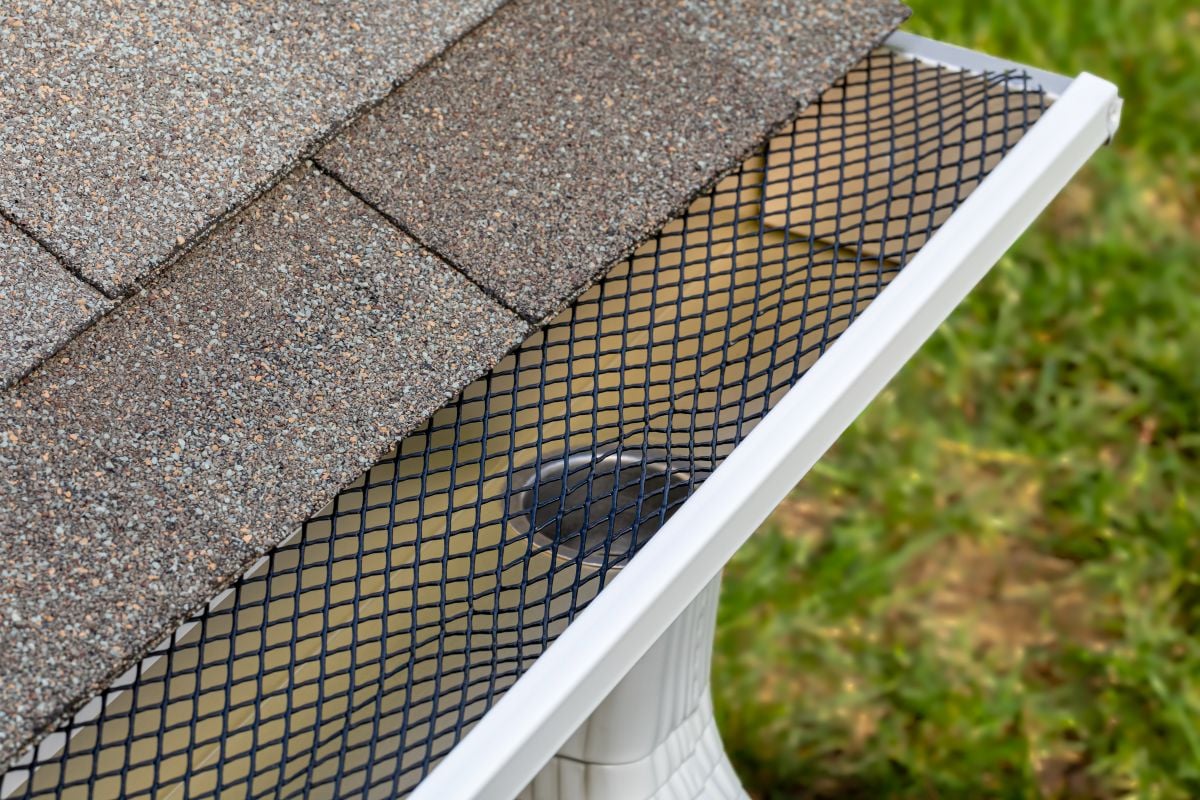
Where gutters connect to downspouts, turbulence and back-pressure can cause water to escape sideways rather than flowing cleanly into the downspout opening. Splash guards at these transition points stabilize water flow and ensure it enters the downspout rather than escaping around the connection. This is especially important in heavy rain events when downspouts are operating near their drainage capacity.
- Overflow at downspout connection points tends to run down the exterior wall, creating staining and moisture infiltration risk
- In Huntertown, IN and surrounding areas, prolonged heavy rain puts consistent pressure on these connection points during peak storm season
- Proper splash guard placement here also extends the life of the downspout connection hardware by reducing turbulence-related stress
4. Preventing Splash-Back at Downspout Bases
At the base of each downspout, water exits with considerable force and strikes whatever surface is below. Without a splash block or similar guard, this impact creates erosion directly beneath the downspout and can splash water back up against the foundation wall or siding above. A splash guard at the downspout base dissipates this energy and directs water away from the home’s perimeter.
- Splash blocks should slope away from the home at a minimum grade to move water outward, not toward the foundation
- Flexible downspout extensions carry water further from the home when paired with splash guards
- The area directly beneath a downspout without a splash guard typically shows soil erosion within a single season
5. Reducing Overflow at Gutter End Caps
At the ends of gutter runs, water volume and momentum can carry past the end cap when flow is high, allowing water to pour over the side at the eave line. Splash guards or end cap baffles at these points contain water within the gutter channel until it can drain through the downspout rather than escaping over the end. This is particularly relevant on longer gutter runs where water builds momentum before reaching the end.
- End-run overflow is a common source of wet spots in soil directly at the corners of a home
- Homes with single downspouts at the far end of a long gutter run are most vulnerable to this type of overflow
- End cap splash guards are among the easiest and lowest-cost gutter improvements available
Together, these five types of protection address the most common water escape points in a residential gutter system. When splash guards are installed correctly across all of these locations, a gutter system that previously failed in every significant storm can perform reliably through even the heaviest rain events. Homeowners across Huntertown, IN and surrounding areas who have added splash guards report the elimination of wet spots, erosion, and foundation moisture that had been recurring problems.
Choosing the Right Splash Guard for Each Location
Not all splash guards are the same product, and matching the right type to each location ensures the best possible performance. Most residential splash guards fall into a few distinct categories based on where they are used and what problem they are solving.
- Inside corner guards: Pre-formed or custom-bent pieces that fit inside the corner profile of a K-style or half-round gutter. These are the most commonly needed splash guard type on any home with a complex roofline.
- Valley diverters: Angled pieces installed at the point where roof valley drainage meets the gutter. Some are integrated into the roofing system at the valley terminus; others are added to the gutter after installation.
- Downspout outlet guards: Small baffles or shields positioned around the downspout opening to stabilize flow and prevent sideways escape during high-volume events.
- Splash blocks and extensions: Ground-level accessories placed at the base of each downspout, available in concrete, plastic, and flexible rubber, with the best options carrying water several feet from the foundation.
- End cap baffles: Simple additions to the terminal end of a gutter run that prevent water from escaping over the end cap when gutter capacity is approached.
Most of these products are available in aluminum and vinyl to match standard gutter colors and profiles. Aluminum is generally preferred for its durability and resistance to warping, particularly in climates with significant temperature variation. Most splash guard types require only basic tools to install, making them a practical project for homeowners who want to solve overflow problems without waiting for a service appointment.
When Splash Guards Are Not Enough
Splash guards are a highly effective solution for overflow at specific problem points, but they work best when the underlying gutter system is properly sized and maintained. There are situations where splash guards alone cannot resolve water management problems, and understanding these limits helps homeowners decide whether additional upgrades are needed.
Undersized Gutters
If a home’s gutters are too narrow for the volume of water the roof sheds, overflow will occur along the full length of the gutter rather than only at corners and valleys. Splash guards at specific points will not solve this fundamental capacity problem. Upgrading from a 4-inch gutter to a 5-inch or 6-inch profile is the appropriate solution, based on the roof area being drained and local rainfall intensity.
Clogged or Sagging Gutters
Gutters blocked with debris or with low spots where water pools cannot drain properly regardless of accessories added. Regular cleaning, at least twice per year in most areas, is a prerequisite for any gutter accessory to work as intended. If gutters have visible sag or hold standing water after rain, realignment is needed before splash guards will provide meaningful benefit.
| Problem | Splash Guard Fix? | Better Solution |
| Overflow at inside corners | Yes | Splash guard at corner |
| Valley discharge overshoot | Yes | Valley diverter splash guard |
| End-run overflow | Yes | End cap baffle |
| Full-length overflow | No | Larger gutter profile |
| Standing water in gutter | No | Realignment and re-slope |
| Debris blockage | No | Gutter cleaning or guards |
Recognizing which problem you are dealing with is the first step toward choosing the right solution, and in many cases splash guards and a gutter upgrade work best together rather than as alternatives.
Let Maumee River Roofing Help You Stop Water Before It Starts
Water damage from poorly managed roof drainage is one of the most common and preventable sources of home repair costs, and gutter splash guards are one of the most affordable ways to address it. Getting the right accessories installed in the right locations takes a trained eye and knowledge of how your specific roof sheds water. Maumee River Roofing has helped homeowners across Huntertown, IN and surrounding areas improve their drainage systems and protect their homes from damage that adds up quietly over seasons of unmanaged overflow. If you are seeing wet spots at your foundation, eroded soil around your home, or water stains on your fascia after storms, do not wait for the problem to grow. Contact us today and let our team assess your gutter system and recommend the right solution for your home.