

When it comes to protecting your investment and managing energy costs, few decisions matter more than what goes beneath your roofing membrane. Commercial roof insulation types vary widely in material, performance, and cost, and choosing the wrong one can mean higher utility bills, moisture issues, and a shorter roof lifespan. Whether you own a warehouse, retail space, or office building, understanding your options makes it easier to work with a qualified roofing contractor who handles every aspect of protecting commercial properties from the elements.
What you’ll learn in this guide:
- Why insulation is a critical part of any commercial roofing system
- The most common commercial roof insulation types and how each performs
- Key factors that influence which insulation is best for your building
- How climate and building use affect your decision
- When to upgrade or replace your existing insulation
Why Commercial Roof Insulation Deserves More Attention Than It Gets
Most building owners spend a great deal of time selecting their roofing membrane and very little time thinking about what sits beneath it. That is a costly oversight. Insulation is the layer doing most of the heavy lifting when it comes to energy efficiency, moisture control, and structural performance. Without the right insulation, even the best roofing system will underperform.
Here is why getting insulation right from the start pays off:
- Energy savings: Proper insulation reduces heat transfer through the roof, which directly lowers heating and cooling costs throughout the year.
- Moisture resistance: Quality insulation creates a barrier that limits condensation buildup, which is one of the leading causes of roof deck deterioration.
- Code compliance: Many municipalities, including those serving Auburn, IN and surrounding areas, require commercial buildings to meet minimum R-value standards under updated energy codes.
- Roof longevity: Insulation cushions the membrane from thermal shock, reducing expansion and contraction cycles that wear out roofing materials prematurely.
When insulation is installed correctly and matched to the building’s use and climate demands, the return on investment shows up clearly in reduced operating expenses and fewer maintenance calls over the life of the roof.
6 Commercial Roof Insulation Types Every Building Owner Should Know
There is no single insulation product that works best in every situation. Each material has distinct advantages depending on application, budget, and performance goals. Here is a breakdown of the most commonly used options in today’s commercial roofing market.
1. Polyisocyanurate (Polyiso)
Polyiso is the most widely used commercial roof insulation in North America, and for good reason. It offers the highest R-value per inch of any rigid board insulation, typically around R-6 per inch, which means you can achieve strong thermal performance without adding excessive thickness to your roofing assembly.
- Works well with TPO, EPDM, and modified bitumen membrane systems
- Lightweight and easy to handle during installation
- Facer options include foil and fiber glass, affecting how it handles moisture
One important consideration is that polyiso performs at a slightly lower effective R-value in very cold temperatures, which is worth discussing with your contractor if your building is in a region with harsh winters.
2. Extruded Polystyrene (XPS)
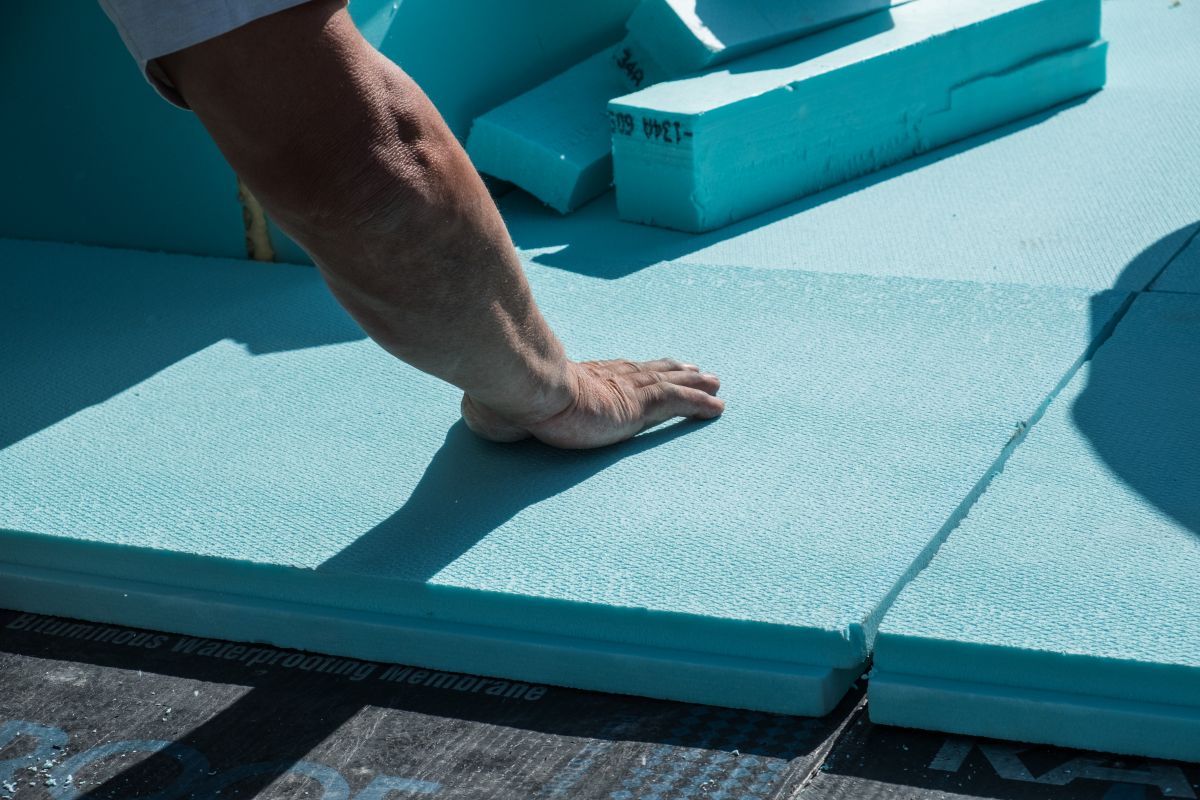
XPS insulation is recognized by its distinctive blue, pink, or green color depending on the manufacturer. It delivers a consistent R-value of around R-5 per inch and holds that value reliably over time, even in wet conditions.
- Highly resistant to moisture absorption, making it a strong choice for roofs prone to ponding water
- Denser and more dimensionally stable than expanded polystyrene
- Commonly used as a recovery board over existing insulation layers
For flat or low-slope commercial roofs in Auburn, IN and surrounding areas, where freeze-thaw cycles put stress on roofing assemblies, XPS is a dependable and proven choice.
3. Expanded Polystyrene (EPS)
EPS is often recognized as the same material used in foam coffee cups, but commercial-grade EPS board insulation is significantly denser and more durable. It offers an R-value of roughly R-3.6 to R-4.2 per inch depending on density.
- More permeable to moisture vapor than XPS, which can be an advantage in certain vapor management strategies
- One of the most cost-effective rigid insulation options on the market
- Performs consistently across a wide temperature range
EPS works particularly well in protected membrane roof assemblies where the insulation sits above the waterproofing membrane.
4. Mineral Wool (Rock Wool)
Mineral wool is made from volcanic rock or industrial slag and offers a unique combination of thermal performance, fire resistance, and sound attenuation. It typically delivers an R-value of around R-3.7 to R-4.2 per inch.
- Exceptional fire resistance, often able to withstand temperatures above 1,000 degrees Fahrenheit
- Outstanding acoustic performance, useful for buildings near airports, highways, or industrial areas
- Does not support mold growth and handles moisture exposure better than many foam-based products
For commercial buildings that need to meet strict fire code requirements or reduce interior noise levels, mineral wool often becomes the material of choice.
5. Spray Polyurethane Foam (SPF)
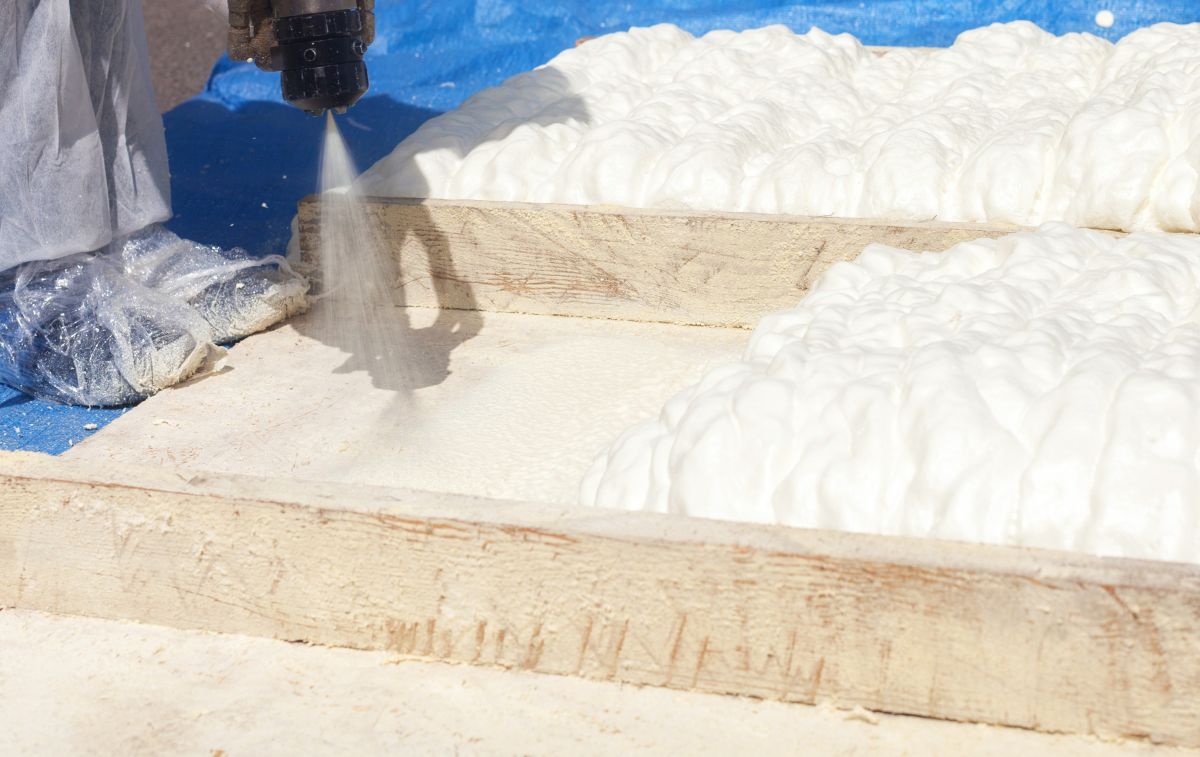
SPF is a two-component system that is sprayed directly onto the roof deck and expands into a seamless, rigid layer of insulation. It provides both insulation and a degree of waterproofing in a single application, with R-values ranging from R-6 to R-6.5 per inch.
- Adheres directly to the roof deck, eliminating thermal bridging at seams
- Fills in irregularities, which helps improve drainage on older roofs
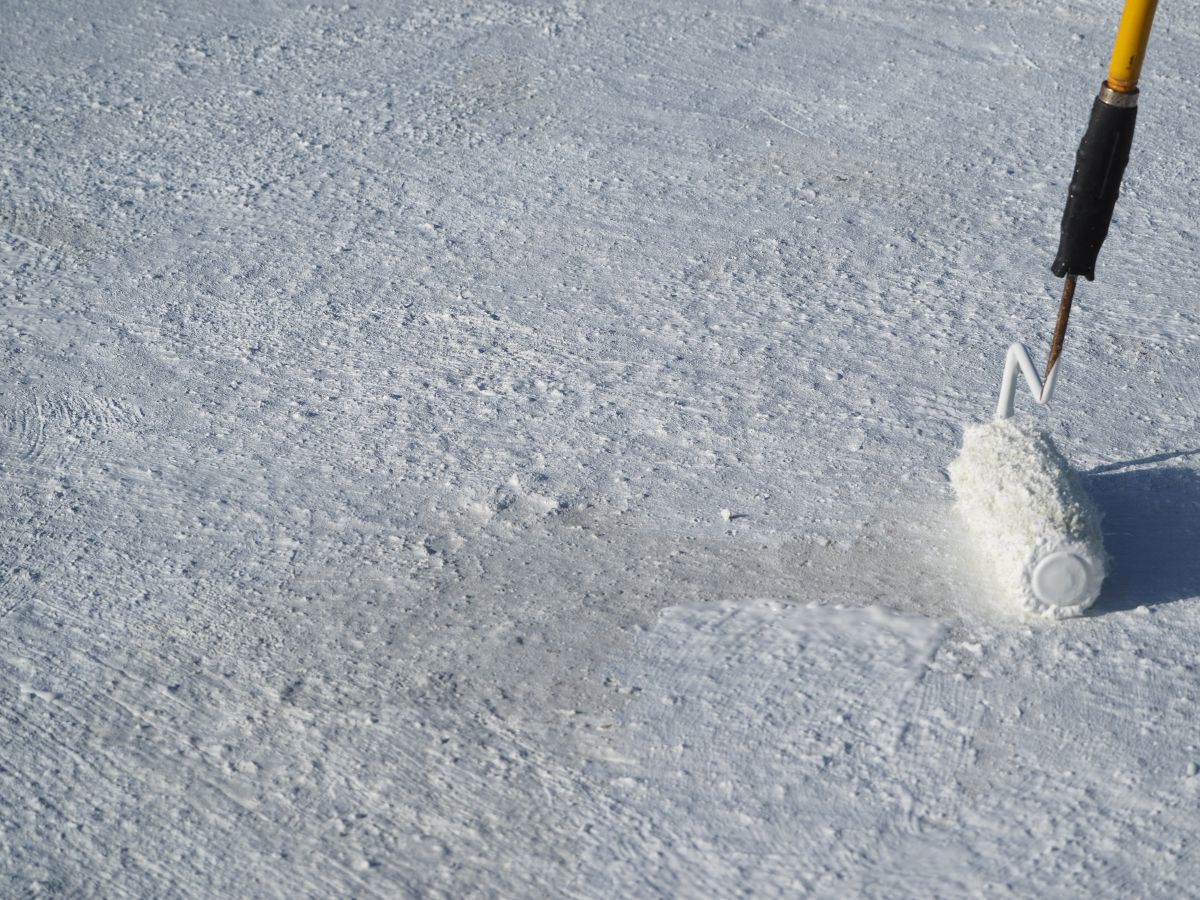
- Requires a UV-protective coating to prevent degradation from sun exposure
SPF systems are popular for re-roofing projects where building owners want to add insulation without tearing off the existing roof structure.
6. Perlite and Wood Fiberboard
Though less common than foam-based options, perlite and wood fiberboard are still used in specific applications, particularly as recovery or tapered insulation boards. They are vapor-permeable and work well as part of a balanced roofing assembly.
- Often used as a thermal break or base layer beneath higher-performance insulation
- Compatible with most adhesive and hot-asphalt installation methods
- Provides a degree of slope correction when used in tapered configurations
These materials are rarely the primary insulation choice today, but they continue to serve a useful role in hybrid and retrofit roofing assemblies.
Factors That Influence the Right Choice for Your Building
Knowing what each product offers is only part of the equation. The best insulation for your building depends on several variables that your roofing contractor needs to evaluate before recommending a system.
Climate and temperature swings play a significant role. Buildings in areas with cold winters and hot summers experience more thermal cycling, which puts additional stress on insulation and roofing membranes alike. Contractors serving Auburn, IN and surrounding areas understand these regional demands and can guide product selection accordingly.
Building use and occupancy type also shape the decision. A refrigerated warehouse has very different insulation requirements than a retail storefront or office building. Humidity levels, temperature control expectations, and internal moisture loads all factor in.
R-Value Requirements and Code Compliance
Most commercial building codes now require minimum R-values for roof assemblies, and these requirements have increased in recent updates to the ASHRAE energy standards. Your contractor should calculate the total thermal resistance needed to meet local code and achieve the energy performance you want. In many cases, achieving the required R-value means using multiple layers of insulation boards installed in offset courses to eliminate thermal bridging at joints.
New Construction vs. Re-Roofing Projects
In new construction, you have more flexibility to design the insulation assembly from scratch. In a re-roofing scenario, constraints like existing roof height, drain locations, and substrate condition limit your options. Some insulation types adhere well over existing materials, while others require a clean substrate. Understanding the project scope from the beginning helps avoid costly surprises during installation.
Comparing Insulation Types at a Glance
Each insulation material balances thermal performance, moisture resistance, and cost differently. The table below provides a quick reference for the most common options.
| Insulation Type | Approx. R-Value/Inch | Moisture Resistance | Best Use Case |
| Polyiso | R-5.7 to R-6.5 | Moderate | New construction, standard commercial |
| XPS | R-5 | High | Wet environments, re-roofing |
| EPS | R-3.6 to R-4.2 | Moderate | Protected membrane assemblies |
| Mineral Wool | R-3.7 to R-4.2 | High | Fire-rated assemblies, sound control |
| SPF | R-6 to R-6.5 | Very High | Seamless applications, retrofit projects |
| Perlite/Fiberboard | R-2.5 to R-3 | Low | Base layers, tapered systems |
Understanding where each option shines helps narrow the field quickly once you know your building’s specific demands. Comparing these characteristics side by side also makes conversations with your roofing contractor more productive from the first meeting.
Protect Your Building With the Right Roofing System
Choosing the right insulation is one of the most impactful decisions you can make for your commercial property. The wrong product can lead to energy loss, moisture damage, and premature roof failure, while the right one reduces operating costs and extends the life of your entire roofing system for years to come. Business owners in Auburn, IN and surrounding areas have unique regional considerations that make working with a knowledgeable local contractor especially valuable.
At Maumee River Roofing, we take the time to evaluate your building’s specific needs before recommending any system. From new construction to full re-roofing projects, our team has the experience to match the right insulation to your roof and budget. Ready to take the next step? Contact us today to schedule a commercial roofing consultation and get expert guidance tailored to your property.