

Commercial roofing systems are designed for durability, but they still require regular upkeep to perform at their best. Over time, dirt, algae, mold, and debris can accumulate, leading to drainage problems, surface damage, and energy inefficiency. That’s why commercial roof cleaning is an essential part of preventive maintenance for every property owner.
Whether you manage a warehouse, retail building, or office complex, a clean roof protects your investment and extends the life of your system. In cities like Fort Wayne and surrounding areas, where changing seasons bring everything from pollen to snow, keeping your roof free of buildup is key to avoiding expensive repairs later. To explore long-term maintenance or repair options, check out our commercial roofing solutions for details on professional care designed for business properties.
Here’s what you’ll learn in this guide:
- Why regular roof cleaning is critical for commercial buildings
- The step-by-step process professionals use to clean flat and low-slope roofs
- Safe cleaning methods and materials for different roofing systems
- Preventive tips to reduce buildup and extend your roof’s lifespan
Why Commercial Roof Cleaning Matters
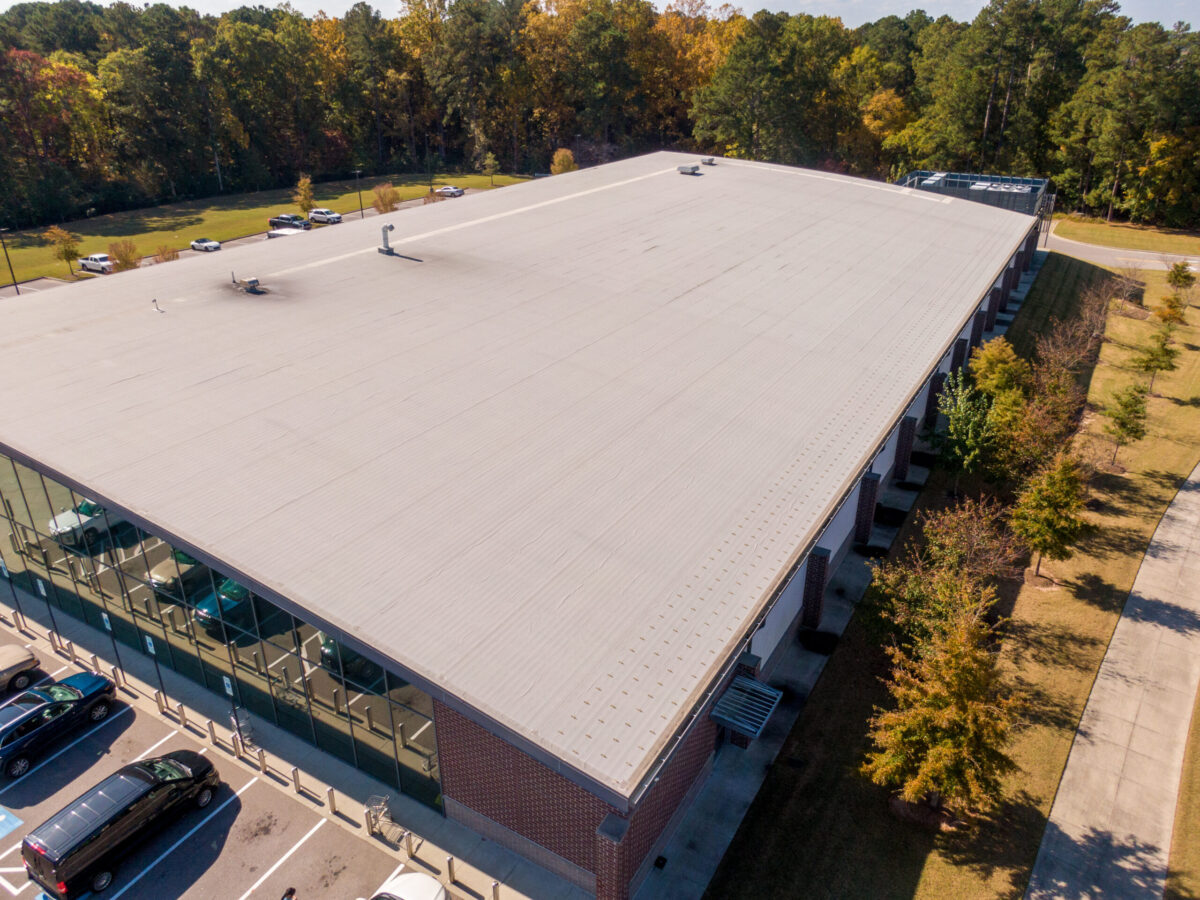
Roof cleaning might sound like a cosmetic task, but it plays a major role in preserving the health and efficiency of your entire roofing system. When dirt and organic matter accumulate, they trap moisture and cause slow deterioration that can lead to leaks or structural damage.
Here’s why consistent cleaning is one of the smartest maintenance investments you can make:
- Prevents structural damage: Organic growth like moss, algae, and mold breaks down roofing membranes and coatings, allowing water to seep in.
- Improves drainage efficiency: Debris can clog scuppers, drains, and gutters, leading to standing water that stresses your roof structure.
- Extends lifespan: Regular cleaning removes damaging contaminants that shorten the service life of your roof materials.
- Boosts energy performance: A clean roof reflects sunlight more effectively, reducing heat absorption and cooling costs.
- Maintains professional appearance: A clean, well-kept roof enhances your property’s image and can even impact tenant satisfaction.
Neglecting cleaning may seem like a short-term cost saver, but the long-term damage can quickly multiply. Consistent care keeps small issues from turning into major—and expensive—repairs.
6 Step Commercial Roof Cleaning Process
Proper roof cleaning requires a systematic approach and safety-conscious execution. While some small facilities may attempt light cleaning themselves, most commercial roofs require professional expertise and equipment. Here’s a look at the process professionals follow to clean low-slope and flat commercial roofs safely and effectively.
1. Inspection and Safety Setup
Before any cleaning begins, a comprehensive inspection ensures the roof’s integrity and identifies potential hazards.
During this phase, professionals will:
- Check for punctures, loose seams, or damaged flashing
- Identify drainage issues or areas of ponding water
- Assess the roofing material type (TPO, EPDM, PVC, metal, etc.)
- Secure perimeter safety lines, ladders, and anchor points
This inspection also helps determine which cleaning method—pressure washing, soft washing, or chemical treatment—is safest for the specific roof membrane.
2. Removal of Loose Debris
The next step is clearing all visible debris such as leaves, twigs, branches, and dirt. Crews use blowers, brooms, and vacuums to ensure no sharp objects remain that could puncture the surface during cleaning.
Key focus areas:
- Roof drains, scuppers, and downspouts
- Around HVAC units, vents, and skylights
- Parapet walls and gutter lines
Removing debris first ensures that subsequent cleaning treatments are evenly applied.
3. Application of Cleaning Solution
Once debris is cleared, cleaning agents are applied to remove organic growth, stains, and pollutants. The solution type depends on the roofing material and level of buildup.
Common cleaning agents include:
- Biodegradable detergents for general dirt and grime
- Algaecide or fungicide for moss and mold growth
- Degreasers for oily residue or industrial buildup
These solutions are left to dwell for a specific time to break down contaminants without harming the roof membrane.
4. Soft Washing or Low-Pressure Rinsing
For most commercial roofs—especially those made of TPO, PVC, or EPDM—high-pressure washing can be too aggressive. Instead, soft washing or low-pressure rinsing is used to gently remove loosened dirt and organic material.
Soft washing benefits:
- Prevents membrane damage or seam separation
- Uses eco-friendly solutions safe for the environment
- Provides thorough cleaning without abrasion
Pressure levels are carefully controlled, typically under 1,000 PSI, to avoid compromising seams or coatings.
5. Spot Treatment and Detailing
Once the main cleaning is complete, technicians inspect the surface again for stubborn spots or stains.
Additional tasks may include:
- Treating algae or lichen with targeted solutions
- Cleaning around vent pipes and HVAC units
- Touching up reflective coatings as needed
This stage ensures a uniform, clean finish across the entire roof surface.
6. Final Rinse and Post-Cleaning Inspection
After all contaminants are removed, the roof is given a final rinse with clean water. The team then conducts a final inspection to verify that drains are clear, seams are intact, and the roof is free of cleaning residues.
Post-cleaning checks include:
- Testing all drainage systems
- Verifying there’s no standing water
- Ensuring no solution runoff has affected landscaping or nearby property
The result is a clean, well-draining roof that’s ready for the next season.
Choosing the Right Cleaning Method for Your Roof Type
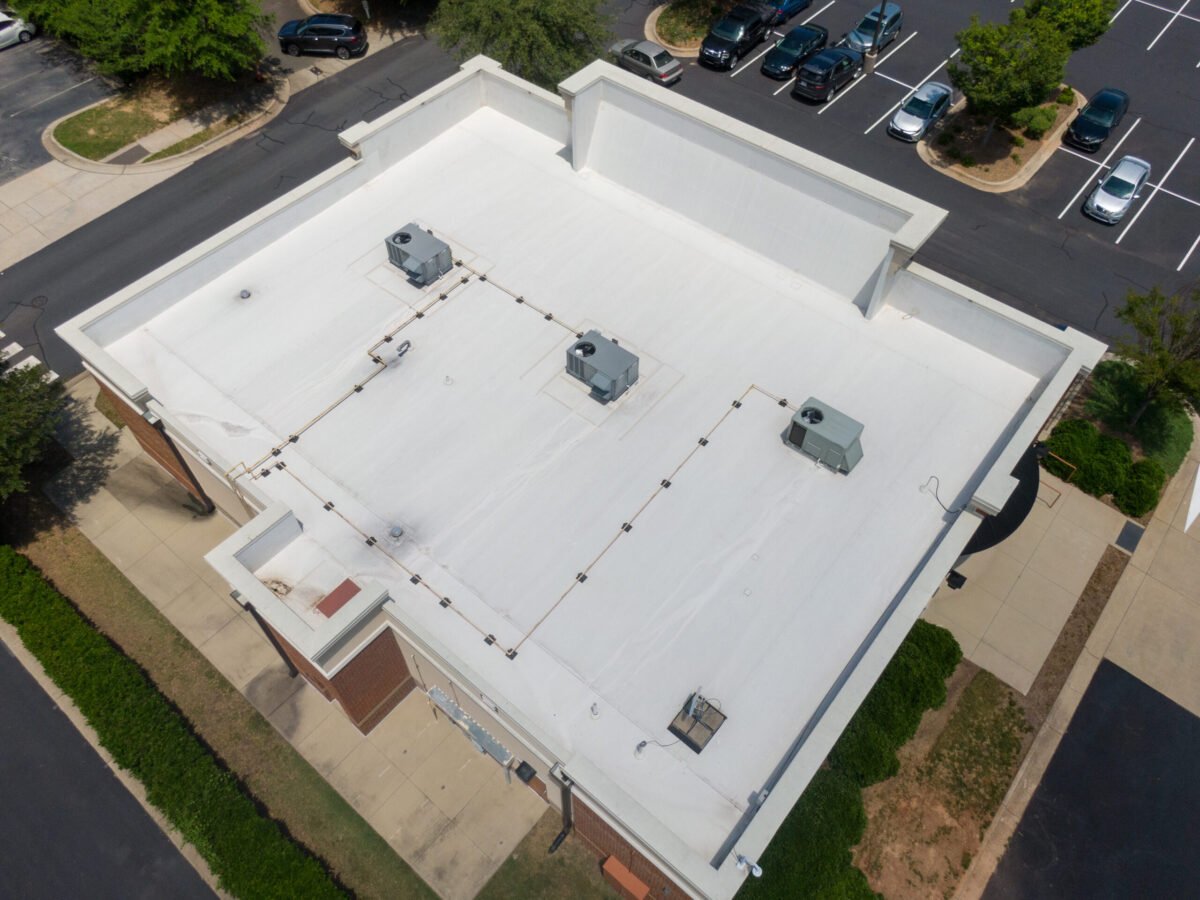
Not all commercial roofs are created equal, and each requires specific cleaning techniques to prevent damage. Here’s how cleaning differs based on material type.
TPO and PVC Roofs
Thermoplastic membranes like TPO and PVC are smooth and reflective but prone to surface dirt buildup. Soft washing with a mild detergent works best for these materials.
Avoid: Abrasive scrubbing or high-pressure systems that can degrade the reflective layer.
EPDM Roofs
EPDM, a rubber roofing material, is flexible and durable but sensitive to harsh chemicals. Use pH-neutral cleaners and soft brushes to prevent surface damage.
Tip: Avoid petroleum-based solvents—they can deteriorate the membrane.
Metal Roofs
Metal roofing can tolerate gentle pressure washing but still requires care around seams and fasteners. Detergents designed for metal surfaces help prevent corrosion and staining.
Bonus Benefit: Cleaning metal roofs restores their reflective properties, lowering cooling costs.
Modified Bitumen Roofs
These roofs have multiple layers, so it’s critical to avoid water infiltration during cleaning. Use low-pressure rinsing and ensure proper drainage afterward to prevent water saturation.
Pro Tip: Apply a reflective coating after cleaning to restore energy efficiency and UV resistance.
How Often Should a Commercial Roof Be Cleaned?
The ideal cleaning schedule depends on environmental factors, location, and roof type. Generally, commercial roofs should be cleaned once or twice per year, preferably in spring and fall.
Additional cleanings may be needed if:
- Your building is near trees or industrial areas with heavy dust
- You notice pooling water, algae, or black streaks
- There’s excessive debris after storms
In Fort Wayne and surrounding areas, spring cleaning removes winter debris, while fall cleaning prepares the roof for snow and freezing temperatures.
Regular cleanings are also vital for maintaining warranty compliance, as many manufacturers require documented maintenance to keep coverage valid.
Preventive Tips to Keep Your Roof Clean Longer
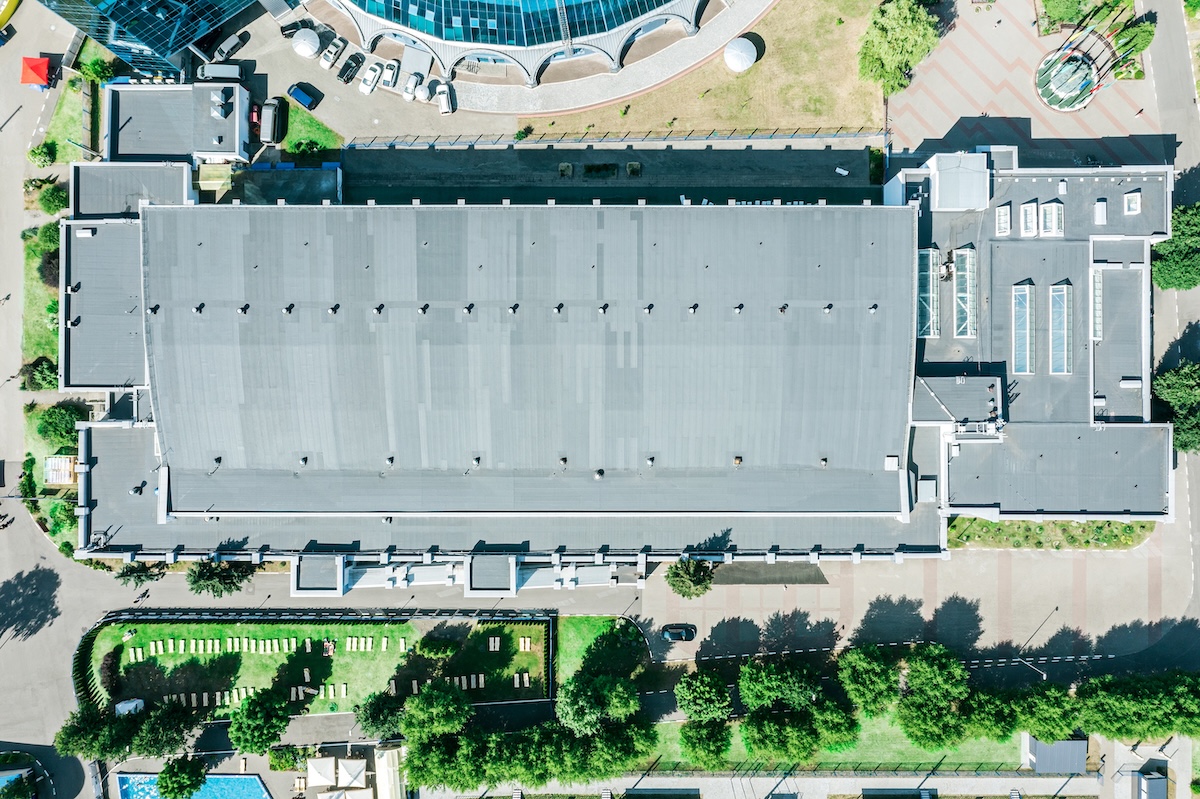
Beyond professional cleaning, certain maintenance habits can help minimize buildup and protect your roof year-round.
- Inspect quarterly: Catch small issues early before they escalate.
- Trim overhanging branches: Reduces falling leaves and twigs that can clog drains.
- Clean gutters regularly: Keeps water flowing away from the roof surface.
- Check HVAC condensate lines: Ensure water isn’t draining directly onto the roof membrane.
- Schedule annual inspections: Professional reviews confirm your roof remains watertight and clean.
Proactive care keeps your commercial property in excellent condition, extending your roof’s lifespan and maintaining energy efficiency.
Comparing DIY Cleaning vs. Professional Service
While small maintenance tasks can be handled in-house, full roof cleaning is best left to experienced professionals. The chart below shows why:
| Task | DIY Cleaning | Professional Cleaning |
| Safety Equipment | Limited | OSHA-compliant systems |
| Cleaning Solutions | General-use detergents | Material-specific formulas |
| Risk of Damage | Moderate to high | Minimal with proper techniques |
| Thoroughness | Surface-level | Deep, complete cleaning |
| Warranty Protection | May void warranty | Preserves manufacturer coverage |
Professionals bring not only the right tools but also the expertise to handle each roof material correctly, ensuring safety and long-term results.
Protect Your Investment with Regular Roof Cleaning
A clean commercial roof is more than just an aesthetic choice—it’s a vital part of maintaining your property’s performance, efficiency, and longevity. Regular cleaning prevents costly leaks, preserves warranties, and ensures your business operates without interruption.
At Maumee River Roofing, we specialize in comprehensive maintenance and cleaning services for commercial properties in Fort Wayne and surrounding areas. Our team uses industry-approved techniques and materials that protect your roof while restoring its original performance and appearance.
If your building’s roof hasn’t been cleaned recently, or you’re noticing buildup or drainage issues, contact us today to schedule a professional assessment with Maumee River Roofing.