

Designing or maintaining an apartment complex roofing system requires far more than standard roofing knowledge. The roof over a multi-unit building affects tenant comfort, energy efficiency, and long-term property value. Whether you’re constructing a new complex or upgrading an older one, the right plan ensures both durability and cost-effectiveness. For large-scale projects in Indianapolis and surrounding areas, partnering with professionals who understand complex roof systems makes all the difference in avoiding future headaches.
If you’re considering new installations or upgrades, explore our roofing solutions to better understand how design strategy and quality materials can maximize long-term value.
In this guide, you’ll learn:
- What makes apartment complex roofs unique
- The essential steps for planning and designing your roof
- The best materials for long-term performance
- How to reduce maintenance costs through smart choices
Why Apartment Complex Roof Design Matters

Roof design impacts every level of property management—from daily maintenance to long-term profitability. For large residential properties, a well-planned roof protects tenants and simplifies ownership.
- Increased Building Longevity: Proper design prevents leaks, ponding, and structural wear, extending your building’s lifespan.
- Energy Efficiency: Reflective or insulated materials reduce utility costs for both owners and tenants.
- Reduced Maintenance Needs: Strategic slope and drainage design minimize water pooling and repair frequency.
- Improved Tenant Comfort: Reliable roofing means fewer complaints, less downtime, and greater satisfaction.
- Higher Property Value: A quality roof signals professionalism, helping you attract tenants faster and maintain occupancy.
Owners in Indianapolis and surrounding areas often find that upfront planning dramatically reduces long-term expenses, turning a necessary investment into an advantage.
5 Steps to Plan and Design the Best Roof for Your Apartment Complex

Every successful apartment complex roofing project begins with a thoughtful process. The goal is to balance performance, aesthetics, and cost efficiency while ensuring the system meets code and climate demands.
1. Conduct a Detailed Property Assessment
Before any design work starts, professionals perform a thorough evaluation of your property. This step identifies existing roof conditions, load requirements, ventilation needs, and drainage challenges.
A proper assessment includes:
- Reviewing blueprints or existing roof layouts
- Inspecting insulation, decking, and ventilation systems
- Checking for structural vulnerabilities
- Identifying areas prone to pooling or heat exposure
For Indianapolis buildings that experience variable weather conditions, this step ensures the final roof can handle heavy rain, snow, and seasonal temperature shifts.
2. Select the Right Roofing System
Not every roof type suits multi-family buildings. Factors like slope, foot traffic, and maintenance access determine which system performs best.
Common options include:
- TPO (Thermoplastic Polyolefin): Lightweight, energy-efficient, and highly reflective for flat or low-slope roofs.
- EPDM (Ethylene Propylene Diene Monomer): Known for durability and flexibility, ideal for climates with temperature swings.
- Modified Bitumen: Reinforced asphalt layers that provide superior waterproofing for medium-slope structures.
- Asphalt Shingles: Cost-effective and aesthetically versatile for pitched roofs in smaller apartment buildings.
- Metal Roofing: Long-lasting and recyclable, offering strong curb appeal for premium complexes.
Each material offers different benefits in longevity, maintenance, and appearance. A professional roofing contractor will guide you through comparing lifecycle costs and warranties.
3. Optimize Drainage and Ventilation
Apartment roofs face more runoff and moisture exposure than smaller buildings. Proper drainage and airflow prevent water damage, ice dams, and internal moisture buildup.
Key design considerations include:
- Installing internal drains or scuppers to move water quickly
- Ensuring gutters and downspouts are properly sized
- Including ridge vents or mechanical exhaust systems for attic or top-floor ventilation
- Designing adequate slope to prevent ponding on flat surfaces
Effective drainage design saves thousands in long-term maintenance costs, especially in climates like Indianapolis where rain and snow accumulation can be significant.
4. Choose Energy-Efficient Features
Modern roofing designs can dramatically reduce energy waste and improve tenant comfort. Cool roofs and high-insulation materials help maintain consistent indoor temperatures while lowering HVAC strain.
Popular energy-saving options include:
- Reflective roof coatings to reduce heat absorption
- High-R-value insulation boards
- Radiant barriers for attic areas
- Light-colored membranes to combat solar gain
These upgrades not only lower energy bills but also help property owners qualify for sustainability incentives or green certifications.
5. Plan for Long-Term Maintenance
A great roof design includes a clear maintenance strategy. Even the best materials require periodic inspections to prevent premature wear.
A strong maintenance plan includes:
- Biannual professional inspections (spring and fall)
- Debris clearing from drains and gutters
- Sealant and flashing checks around vents and skylights
- Documented service history for warranty protection
Owners who manage multiple buildings in Indianapolis and surrounding areas often benefit from setting up scheduled maintenance programs with their roofing contractor for predictable budgeting and consistent performance.
Key Design Factors That Make a Roof Last

Design is more than material choice—it’s about understanding how each component interacts under real-world conditions. Every layer plays a vital role in the roof’s performance, safety, and appearance.
Structural Load Considerations
Apartment buildings must account for added weight from snow, HVAC units, or solar panels. Engineers calculate load limits to ensure the roof frame supports all design features safely.
Insulation and Moisture Barriers
A solid insulation layer keeps interiors comfortable while moisture barriers prevent leaks from reaching the structure. Materials like polyiso or closed-cell foam add both efficiency and protection.
Slope and Drainage
Flat or low-slope roofs often use tapered insulation systems to guide water toward drains. This eliminates standing water and extends membrane life.
Roof Access and Safety
Multi-unit buildings require safe walkways or barriers for maintenance teams. Well-planned access points reduce risk and speed up future repairs.
Fire and Wind Ratings
Choosing UL- or FM-rated materials ensures compliance with local codes and provides additional safety for tenants in high-wind or storm-prone areas.
Comparing Roof Material Options for Apartment Complexes
Selecting materials is one of the most impactful choices in roof design. Below is a side-by-side comparison of common systems used for apartment buildings.
| Material Type | Lifespan | Energy Efficiency | Maintenance Needs | Best For |
| TPO | 20–30 years | Excellent | Low | Flat or low-slope roofs |
| EPDM | 25–35 years | Moderate | Low | Variable climates |
| Modified Bitumen | 15–25 years | Moderate | Medium | Small or mid-sized complexes |
| Asphalt Shingles | 20–30 years | Moderate | Medium | Pitched roofs |
| Metal Roofing | 40–60 years | High | Low | Premium or long-term projects |
For property managers in Indianapolis and surrounding areas, balancing durability and cost often determines which system provides the best ROI.
Enhancing Roof Longevity Through Smart Upgrades
Adding the right enhancements during installation can significantly improve roof life and tenant satisfaction.
- Protective Coatings: Extend lifespan and reduce UV damage.
- Gutter Guards: Keep drainage systems free from clogs.
- Reflective Finishes: Help manage heat absorption and cooling costs.
- Snow Guards: Prevent sliding snow and icicle hazards during winter.
- Rooftop Walk Pads: Protect membranes from foot traffic during maintenance.
These upgrades provide extra value, particularly for property owners managing several complexes with shared maintenance teams.
Mistakes to Avoid When Designing an Apartment Roof
Avoiding common pitfalls can save property owners years of frustration and unnecessary cost.
Overlooking Long-Term Costs
Cheaper materials may seem budget-friendly, but frequent repairs and replacements increase lifetime expenses.
Ignoring Local Climate
Every city has unique weather demands. Roofing systems in Indianapolis and surrounding areas must withstand humidity, storms, and freeze-thaw cycles.
Skipping Professional Design Input
Relying solely on general contractors can lead to costly oversights. Involving roofing specialists during planning ensures correct slope, ventilation, and load calculations.
Poor Communication During Construction
Delays or tenant disturbances often occur when roofing teams and property managers fail to coordinate schedules. Detailed communication plans minimize inconvenience and liability.
Lack of Post-Installation Maintenance
Even the strongest materials fail without care. Neglecting inspections or cleaning accelerates deterioration and voids warranties.
Roof Types for Apartment Complexes
Apartment complexes vary widely in their architectural design, which means the roof structure must align with the building’s overall layout, drainage needs, and long-term performance goals. Understanding the main roof types used in multi-family construction helps property owners and managers choose systems that balance durability, energy efficiency, and maintenance demands.
Flat Roofs
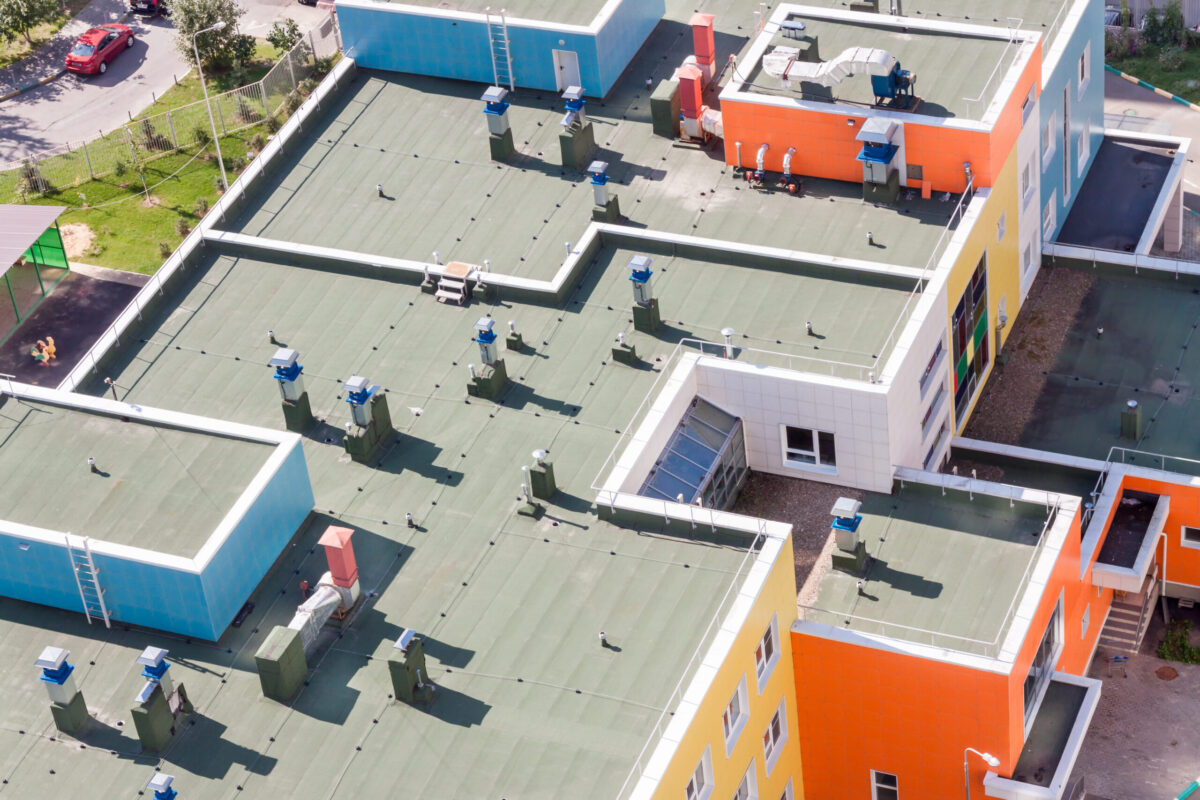
Flat roofs are the most common design for large apartment complexes due to their cost efficiency and ability to house HVAC units, vents, walkways, solar panels, and mechanical systems. Although called “flat,” these roofs include a slight pitch to encourage proper drainage and work best with membranes like TPO, EPDM, or modified bitumen.
Low-Slope Roofs
Low-slope roofs offer similar functional benefits to flat roofs but with more effective drainage. Their subtle incline helps reduce ponding water and improves the lifespan of membrane systems. This design is ideal for buildings needing improved moisture control without sacrificing rooftop utility space.
Pitched Roofs
Pitched roofs are common on smaller apartment buildings, townhome-style complexes, or developments prioritizing residential curb appeal. They naturally shed water and often use asphalt shingles or metal systems. These roofs provide excellent drainage, strong weather performance, and easier access for certain maintenance tasks.
Combination Roofs
Combination roofs incorporate multiple roof structures into one apartment complex. Large developments may use flat roofs for utility areas and pitched sections to enhance aesthetics and drainage. This type requires careful planning to ensure watertight transitions, proper flashing, and coordinated drainage systems across varying slopes.
The Value of Partnering With Experts
Multi-unit roofing requires coordination, precision, and a deep understanding of building codes and safety standards. Choosing an experienced roofing contractor ensures your project stays on schedule and meets every performance goal.
Why Local Expertise Matters
Working with professionals familiar with Indianapolis and surrounding areas means your roof will be designed with regional climate and construction standards in mind. Local teams respond faster, communicate better, and understand the materials that perform best in your environment.
What You Should Expect From a Professional Team
- Comprehensive site evaluations
- Transparent project timelines
- High-quality materials with strong warranties
- Clear communication throughout every stage
- Maintenance plans tailored to your property’s needs
Maumee River Roofing approaches every project with a focus on precision, durability, and long-term client satisfaction.
Secure the Future of Your Apartment Complex Roof
A well-designed roof is more than protection—it’s a foundation for tenant safety, energy efficiency, and sustained property value. Whether you’re upgrading existing structures or planning new construction, investing in thoughtful design pays off for decades.
Maumee River Roofing provides full-service expertise for multi-unit properties across Indianapolis and surrounding areas. From material selection to maintenance programs, our team ensures each system performs as beautifully as it looks.
Protect your investment and simplify your property management experience—contact us today to schedule a consultation with Maumee River Roofing.