

Winter storms can turn a smooth metal roof into an unexpected hazard the moment accumulated snow decides to let go all at once. Installing metal roof snow guards is one of the simplest ways to prevent sudden snow slides from damaging landscaping, gutters, or anything parked below the eaves. Homeowners considering a long-lasting roofing upgrade often overlook this small but important accessory until after their first heavy snowfall causes a problem. This guide explains exactly what snow guards do and why they matter for metal roof owners.
Here’s what you’ll come away understanding:
- Why snow guards are essential for metal roofing in snowy climates
- The different types of snow guards and how they work
- Where and how many guards a typical roof needs
- Answers to the most common questions before installation
Why Snow Retention Deserves Your Attention
Metal roofing sheds snow far more efficiently than asphalt shingles, which sounds like a benefit until that same smooth surface releases an entire winter’s worth of snow in one sudden avalanche. Homeowners in Angola and surrounding areas who have experienced this firsthand know how quickly it can damage gutters, injure pets, or bury a walkway in a matter of seconds. This phenomenon, sometimes called roof avalanche, happens because metal panels offer very little friction compared to textured shingles, allowing accumulated snow and ice to build up until it releases all at once rather than melting gradually. Understanding why snow retention matters helps you protect both your property and the people who use it.
- Property protection: Preventing sudden snow slides protects gutters, downspouts, HVAC units, and landscaping positioned near the roofline, which also helps new gutters last longer without dents or pulled fasteners.
- Personal safety: Snow guards reduce the risk of injury to anyone walking, parking, or working underneath the roof’s edge.
- Structural integrity: Distributing snow load more evenly across the roof surface can reduce stress on the overall structure, a factor worth understanding alongside general roof load capacity.
- Reduced liability: For homeowners with frequent visitors or delivery traffic, snow guards lower the chances of a slip-and-fall incident near entryways.
Once you understand the potential damage a single snow slide can cause, the small investment in snow guards starts to look like an easy decision. The next section breaks down the main types available and how each one functions differently on a metal roof.
5 Types of Metal Roof Snow Guards to Consider
Snow guards come in several distinct styles, each suited to different roof types, budgets, and aesthetic preferences. Understanding how each type functions helps you choose the right option for your specific metal roofing system.
1. Pad-Style Snow Guards
These small, individual guards attach directly to the roof panel, typically using screws with neoprene washers or a bead of silicone to maintain a watertight seal, and work by creating friction points that break up large snow masses into smaller, more manageable amounts. They’re a popular choice because they’re relatively inexpensive, durable, and easy to install in a grid pattern across the roof surface, and are commonly manufactured from aluminum or copper to match different panel finishes.
- Best suited for lighter to moderate snow loads
- Available in colors matched to most standing seam roof panel finishes
2. Pipe or Bar-Style Snow Guards
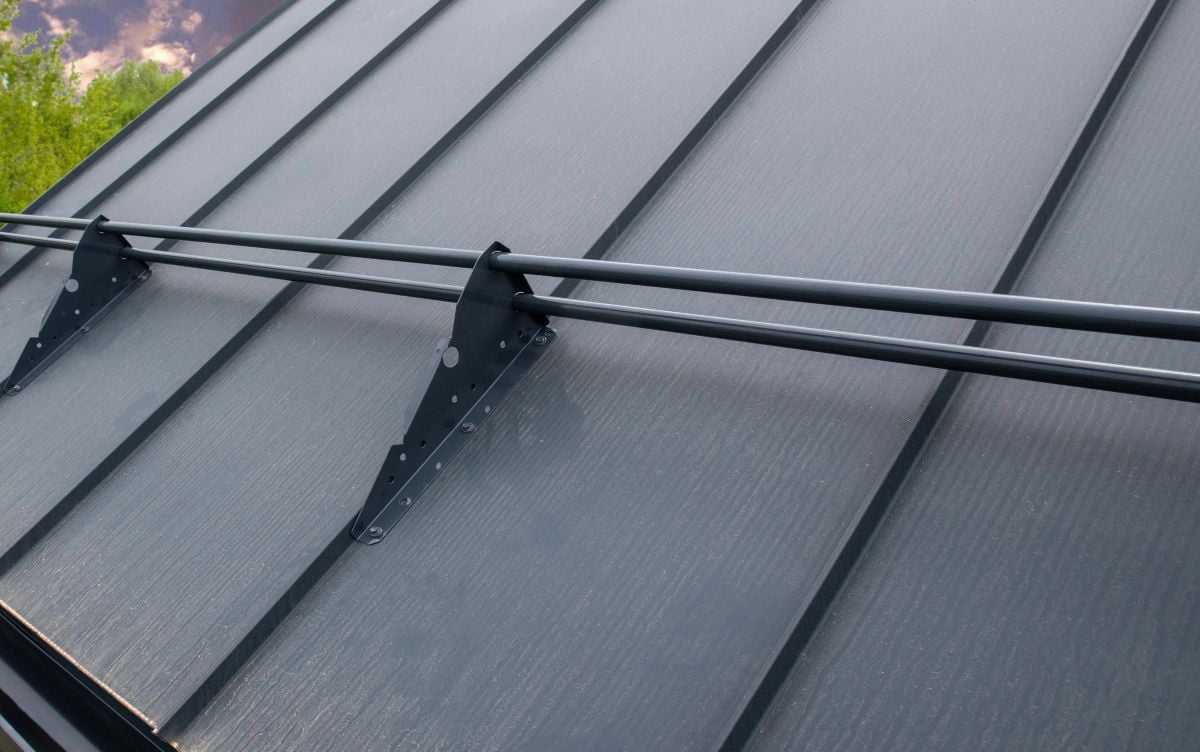
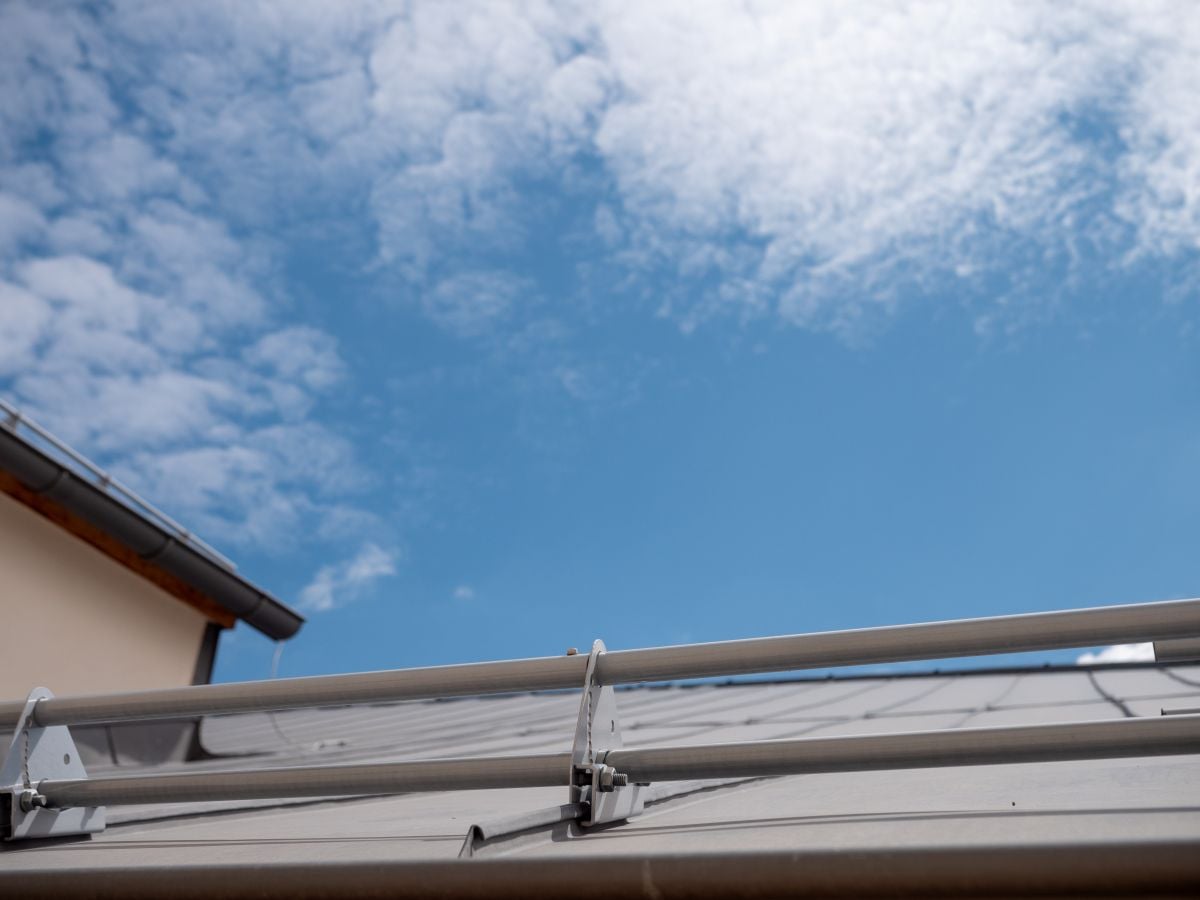
Pipe style systems, sometimes installed as a single bar spanning the width of the roof, run horizontally across the roof, typically positioned above eaves, doorways, or walkways where snow slides pose the greatest risk. Established manufacturers such as Rocky Mountain Snow Guards and Alpine SnowGuards have built a reputation for proven strength and performance in exactly this kind of heavy-duty application. These systems tend to handle heavier snow loads more effectively than individual pad guards, and they can often be installed in multiple rows for roofs that experience particularly deep accumulation each winter.
3. Fence-Style Snow Guards
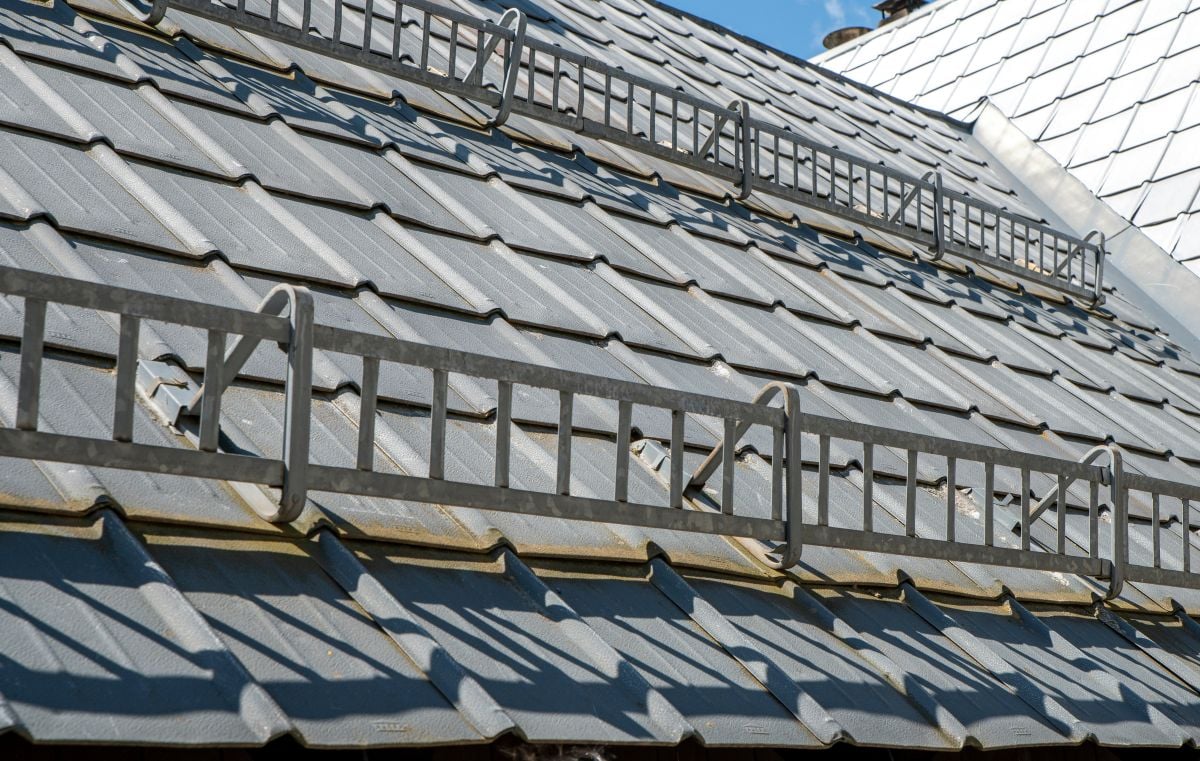
Similar to pipe systems but featuring a more decorative, fence-like appearance, these guards offer strong holding power while blending more naturally into certain architectural styles. They’re often chosen by homeowners who want functional protection without a purely industrial look.
- Ideal for roofs with heavy annual snowfall
- Can be installed along the entire eave or in targeted sections
4. Clip-On Snow Guards
Designed specifically for standing seam metal roofs, these guards clamp onto the seams themselves without requiring any penetration into the roof panels. This installation method helps preserve the roof’s watertight integrity while still providing reliable snow retention.
5. Adhesive-Mounted Snow Guards
For roofs where drilling isn’t ideal, adhesive-mounted guards offer a no-penetration alternative that bonds directly to the panel surface. While convenient, these tend to work best on flatter roof pitches and in milder snow climates rather than areas with consistently heavy accumulation.
Choosing between these five options often comes down to your roof’s specific panel style, typical snowfall amounts, and how much visual impact you’re comfortable with. A knowledgeable roofing contractor can help match the right system to your home’s unique needs and local weather patterns.
Getting the Placement and Spacing Right
Even the best snow guard system underperforms if it’s not positioned correctly across the roof surface. Proper placement depends on several factors specific to your home, including roof pitch, panel width, and the typical snow load your region experiences each winter. Homeowners in Angola and surrounding areas often assume a handful of guards near the eaves is enough, but uneven spacing can leave gaps that allow snow to slip through unimpeded.
- Roof pitch calculations: Steeper roofs generally require more closely spaced guards since snow moves faster and with greater force on a steep incline.
- Snow load zones: Areas with heavier historical snowfall need denser guard placement, often calculated using local building codes as a baseline.
- Panel width considerations: Wider panels may require guards spaced differently than narrower profiles to ensure even coverage across the entire roof surface.
- Critical zone prioritization: Entryways, walkways, and areas above HVAC equipment typically receive extra attention during placement planning.
Warm afternoon temperatures followed by an overnight refreeze can also cause snow to loosen and slide even on days when it isn’t actively snowing, which is why guards need to act as a reliable barrier across a wide range of conditions. It’s also worth noting that guards positioned near valleys or gutters can occasionally collect debris along with snow, so a quick seasonal inspection helps confirm everything is still functioning as intended.
Getting these calculations right requires input from someone familiar with both your specific roofing system and regional snow load requirements. Skipping this step or guessing at placement often results in gaps where snow can still slide through unexpectedly, undermining the entire purpose of the system in the first place.
Snow Guards Versus No Snow Guards: What Changes
It helps to see a direct comparison of what actually changes on a metal roof once snow guards are properly installed. This side-by-side look highlights the practical differences homeowners notice most, and it’s often the deciding factor for those still weighing whether the added cost is worthwhile.
| Factor | Without Snow Guards | With Snow Guards |
| Snow release pattern | Sudden, unpredictable slides | Controlled, gradual melting |
| Gutter damage risk | High | Significantly reduced |
| Safety near entryways | Increased hazard | Much safer |
| Landscaping protection | Vulnerable to impact damage | Well protected |
| Installation cost | None | Modest, one-time investment |
| Material options | Not applicable | Aluminum, copper, and durable polymer choices |
As the comparison shows, the relatively small upfront investment in snow guards pays off quickly by preventing damage that would otherwise require repairs each winter. Homeowners in Angola and surrounding areas who add snow guards during their initial metal roof installation typically find the process far simpler than retrofitting an existing roof later on.
Frequently Asked Questions About Metal Roof Snow Guards
These are some of the most common questions homeowners ask when considering snow guards for their metal roof. The short answers below should help clear up any remaining uncertainty before moving forward, whether you’re planning a new installation or upgrading an existing roof.
Do all metal roofs need snow guards?
Not necessarily, but any metal roof in a region with regular snowfall benefits significantly from them, especially above entryways, walkways, or parking areas.
Can snow guards be added to an existing metal roof?
Yes, though the installation method depends on your specific panel type, with some styles requiring less invasive clip-on or adhesive options.
How many snow guards does a typical roof need?
This varies based on roof size, pitch, and local snow load, which is why a professional assessment is recommended rather than guessing.
Do snow guards damage the roof panels?
Properly installed guards, especially clip-on styles designed for standing seam systems, do not compromise the roof’s watertight integrity.
Are snow guards visible from the ground?
Some styles are more discreet than others, and many can be color matched to the roof panels for a more seamless appearance.
What materials are snow guards made from and how much do they cost?
Most snow guards are manufactured from aluminum, copper, or engineered polymers chosen for their durability and long-term strength. Prices vary depending on material and style, but the investment is generally modest compared to the cost of repairing gutters or landscaping damaged by an uncontrolled snow slide.
Hopefully these answers give you a clearer picture of what to expect during the planning process. A qualified contractor can provide a more detailed assessment based on your home’s specific roof design.
Let Us Help Protect Your Home This Winter
Snow guards might seem like a minor detail, but they play a significant role in protecting your property, your landscaping, and the people who walk beneath your roofline each winter. Whether you’re installing a new metal roof or retrofitting an existing one, getting the right snow guard system in place makes a real difference once the snow starts falling. Maumee River Roofing proudly works with proven, USA-manufactured snow guard systems and has helped customers throughout the region choose a complete solution matched to each home’s unique pitch and panel type. If you’re ready to protect your home before the next snowfall, contact us today and talk with our team about your options.