

If you’re weighing roofing materials for a commercial building, you’ve likely noticed that PVC comes with a higher price tag than some of its single-ply competitors. Understanding pvc roofing cost upfront helps you decide whether the extra investment actually pays off for your specific building, or whether a more affordable membrane would serve you just as well. PVC roofing has been used across the roofing industry in the US for over thirty years and is known for good durability with very little maintenance. Since durability, chemical resistance, and long-term performance all factor into the value equation, it helps to look past the sticker price before choosing a roofing system for your property. This guide breaks down what property owners in Anderson and surrounding areas can expect to pay for PVC roofing in today’s market.
What you’ll learn:
- What drives the price of PVC roofing compared to other membrane options
- The biggest factors that affect your total installation cost
- How PVC’s durability and lifespan factor into long-term value
- How PVC stacks up against TPO and EPDM
- Whether the higher upfront cost is worth it for your building
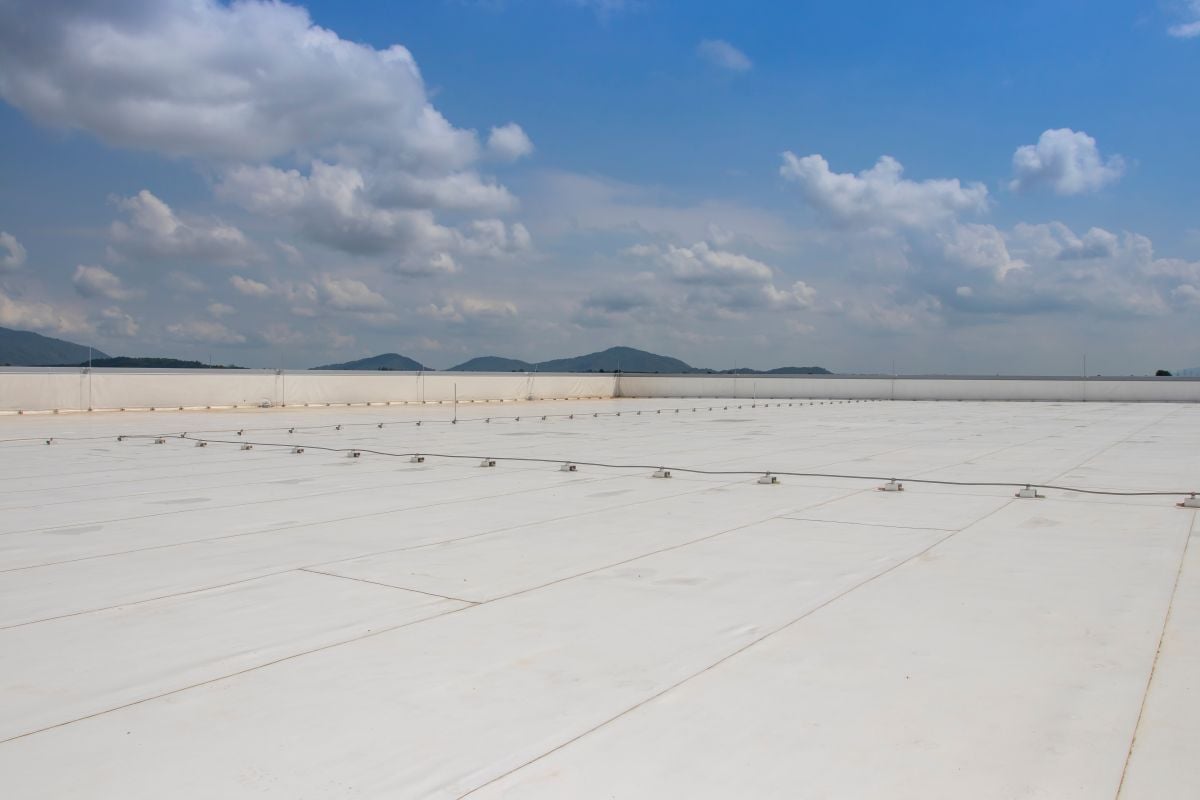
Why PVC Roofing Cost Matters to Property Owners
PVC roofing carries a reputation as a premium single-ply option, and understanding what you’re actually paying for helps you decide if that reputation is worth the price. Because PVC performs differently than other membranes in specific conditions, knowing the cost breakdown lets you match the material to your building’s actual needs rather than choosing based on price alone.
- Informed material comparisons: Understanding PVC’s cost relative to TPO and EPDM helps you weigh price against performance.
- Better long-term planning: Knowing PVC’s expected lifespan helps you calculate the true cost per year of ownership, not just the installation price.
- Reduced risk for specialty buildings: Restaurants, chemical facilities, and buildings with rooftop grease or oil exposure benefit from understanding why PVC often costs more.
- Smarter contractor conversations: Knowing what affects PVC pricing helps you ask the right questions and spot an inflated quote.
This matters even more for property owners comparing multiple bids, since a reputable roofing contractor recommending PVC should be able to explain why it makes sense for your building rather than presenting it as a universal upgrade.
4 Factors That Determine Your PVC Roofing Cost
PVC roofing pricing depends on several variables beyond the base cost of the membrane itself. Across the roofing industry, the average cost of a PVC roofing system typically ranges from $6.00 to $14.00 per square foot installed, with a full project often totaling between $4,000 and $18,000 depending on the size and complexity of the current roof. Commercial roofing contractors weigh a combination of thickness, building specifics, and installation complexity before arriving at a final number, and understanding each piece helps explain why PVC often carries a higher price tag than other single-ply systems. Below are the four factors that most heavily shape the final estimate.
1. Membrane Thickness
PVC membranes come in a range of thicknesses, typically measured in mils, and thicker membranes cost more but provide superior resistance to punctures and hail along with a longer expected lifespan. As a puncture-resistant material, PVC generally offers better long-term performance than thinner or less durable membranes, especially on roofs with foot traffic from maintenance crews. Buildings with heavy foot traffic on the roof, or those in climates with significant temperature swings, often benefit from a thicker membrane despite the added upfront cost.
- Thinner PVC membranes: lower material cost, suited to lighter-duty applications
- Thicker PVC membranes: higher material cost, better suited for high-traffic or harsh-climate roofs
2. Roof Size and Complexity
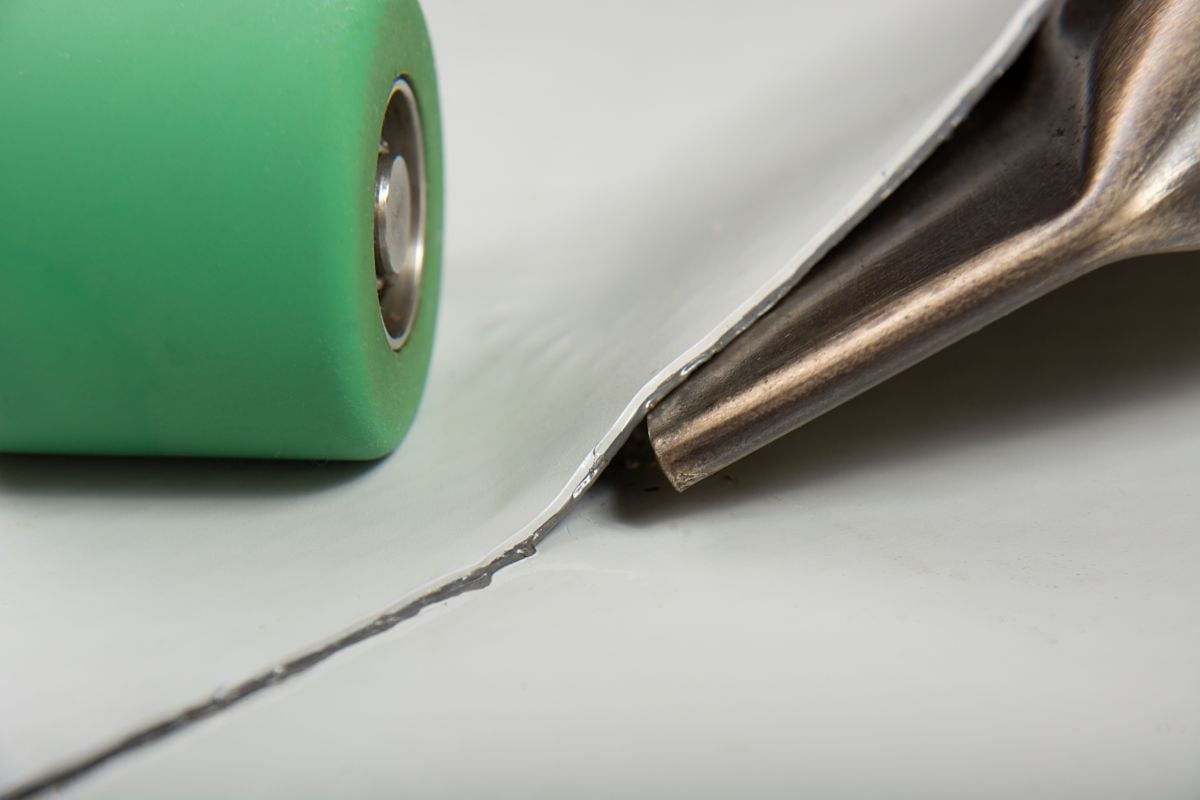
Larger roofs require more material and labor, but complexity matters just as much as square footage. Larger commercial roofs usually decrease the cost per square foot due to economies of scale, while roofs with complex drainage systems require increased labor time regardless of overall size. A roof with multiple penetrations, HVAC curbs, skylights, or unusual angles takes longer to install correctly, since PVC seams are typically heat-welded rather than glued, and that welding process adds labor time around every detail.
- Simple, open roof areas: lower labor cost per square foot due to faster installation
- Roofs with complex drainage or slope changes: higher labor time regardless of total square footage
- Removing an existing roof layer before installation: increases total labor hours and disposal fees compared to a recover over the current roof
3. Installation Method and Labor
PVC installation requires specialized equipment and training for the hot-air welding technology that joins the seams, which means labor costs for PVC often run higher than for adhered or mechanically fastened EPDM systems. Because PVC sheets are hot-air welded rather than glued, well-executed seams tend to reduce future repair bills over the life of the roof. Labor can be moderate to high due to the skilled requirements involved, sometimes accounting for roughly 60% of the total roofing cost, and geographic location also affects installation estimates by 15% to 25% due to regional labor rates and shipping costs. Contractors experienced with PVC bring valuable expertise to the table, since a poorly welded seam is one of the most common failure points on a PVC roof. Owners in Anderson and surrounding areas should always ask a contractor how much PVC-specific experience their crew actually has before signing a contract.
- Heat-welded seams: require trained technicians and specialized equipment
- Mechanically fastened installation: common for PVC and generally faster than fully adhered methods
- Rigid board insulation added underneath the membrane: increases overall material and labor costs but improves energy performance
4. Building Use and Chemical Exposure
Buildings with grease, oil, or chemical exposure, such as restaurants and industrial facilities, often justify PVC’s higher cost because the material resists these substances far better than TPO or EPDM. For buildings without this kind of exposure, the added cost of PVC may not translate into a meaningful performance benefit over a more affordable membrane. Office buildings, retail spaces, and warehouses without significant rooftop chemical exposure may find the savings from choosing TPO or EPDM are better spent elsewhere in the project.
Taken together, these four factors explain why PVC roofing costs tend to run higher than other single-ply options, even though the installation process shares some similarities. A contractor who understands your building’s specific use case can help determine whether PVC’s premium price is justified or whether a different material would serve you just as well.
Understanding PVC’s Long-Term Value
Looking only at the upfront price of PVC roofing tells an incomplete story, since the material’s durability and lifespan often offset the higher initial cost over time. Property owners who calculate cost per year of expected service, rather than focusing solely on the installation price, often find PVC to be a more competitive option than it first appears.
- Chemical and grease resistance is where PVC truly separates itself from other membranes, making it the go-to choice for restaurants, food processing facilities, and buildings near rooftop exhaust systems exposed to oils and grease. Many PVC membranes are reinforced internally with fiberglass or polyester scrim for added strength, and recognized product lines like Carlisle’s Sure-Flex have made PVC a familiar, trusted name among roofing companies nationwide.
- Fire resistance is another advantage, since PVC is inherently more resistant to fire than some other single-ply membranes, which can be a meaningful factor for certain commercial applications and insurance considerations.
- Reflectivity and energy efficiency benefit from PVC’s typically white or light-colored surface, which can offer up to eighty percent solar reflectivity and help reduce cooling costs and energy use during warmer months, particularly for buildings with large, exposed flat roof areas.
- Long service life rounds out PVC’s value proposition, since a well-installed and properly maintained PVC roof is designed to perform reliably for an average of 25 to 35 years, which helps justify the higher price when spread across the life of the roof.
- Potential drawbacks to weigh: PVC roofs can be prone to shrinking over time in some cases, which may eventually require roof repairs at the seams or edges, and industry guidance from groups like the National Roofing Contractors Association urges caution when installing PVC in especially cold climates, so working with a roofer familiar with regional conditions matters.
Property owners in Anderson and surrounding areas who plan to hold onto a property long term often find that PVC’s durability advantages make more financial sense than they would for a shorter-term investment, which may make it harder to recoup the higher upfront cost before the property changes hands.
PVC vs. TPO vs. EPDM: A Cost and Performance Comparison
Choosing between the three most common single-ply membranes often comes down to balancing upfront cost against long-term performance for your specific building. Each material has its own strengths, and the right choice depends heavily on the building’s use case and exposure to chemicals, grease, or extreme weather. It’s worth noting that this comparison applies specifically to flat and low-slope commercial roofs, since a house with a pitched roof is far more likely to use asphalt shingles or, less commonly, slate rather than a single-ply membrane at all.
| Feature | PVC | TPO | EPDM |
| Relative cost | Highest | Moderate | Lowest |
| Chemical and grease resistance | Excellent | Fair | Poor |
| Fire resistance | Strong | Moderate | Moderate |
| Best suited for | Restaurants, industrial buildings | General commercial use | Large, simple roof areas |
| Typical lifespan | 25 to 35 years | 20 to 30 years | 20 to 30 years |
While all three membranes offer similar lifespans when properly installed and maintained, the conditions each one is exposed to over that lifespan matter just as much as the number of years on paper. A restaurant roof exposed to daily grease buildup will likely wear out its EPDM membrane far faster than its rated lifespan suggests, while that same exposure barely affects PVC.
Ultimately, the “best” material depends on matching the membrane’s strengths to your building’s actual conditions rather than defaulting to the cheapest option available. A knowledgeable commercial roofer should walk through these tradeoffs with you rather than steering you toward whichever material happens to be easiest to install.
Get an Honest PVC Roofing Quote from Maumee River Roofing
PVC roofing cost reflects real advantages in durability, chemical resistance, and long-term performance, but it isn’t the right fit for every building. Understanding what drives the price, and whether those advantages matter for your specific property, helps you make a confident decision rather than simply choosing based on the number at the bottom of a quote. Maumee River Roofing has helped property owners throughout Anderson and surrounding areas evaluate PVC alongside other roofing options, providing honest guidance based on the building’s actual needs rather than a one-size-fits-all recommendation. If you’re ready to find out whether PVC is the right choice for your property, contact us today to schedule an inspection with Maumee River Roofing.