

A small leak on a commercial roof rarely stays small for long. Water finds the path of least resistance through insulation, decking, and structural components, causing damage that can cost far more to repair than the original problem. Commercial roof leak detection is the process professionals use to locate active and developing leaks before they escalate into structural failures, mold problems, or business disruptions. Business owners, property managers, and facility managers who take a proactive approach should understand what a thorough commercial roofing inspection so they know what to expect when calling in the pros.
What you’ll learn:
- Why early leak detection matters more on flat and low-slope commercial roofs than most owners realize
- The professional methods used to locate leaks that are not visible to the naked eye
- What factors make commercial roofs especially vulnerable to undetected moisture infiltration
- How to read the early warning signs that a professional inspection is needed
- Why proactive maintenance is almost always less expensive than waiting for visible interior damage
Why Commercial Roof Leaks Are Harder to Find Than You Think
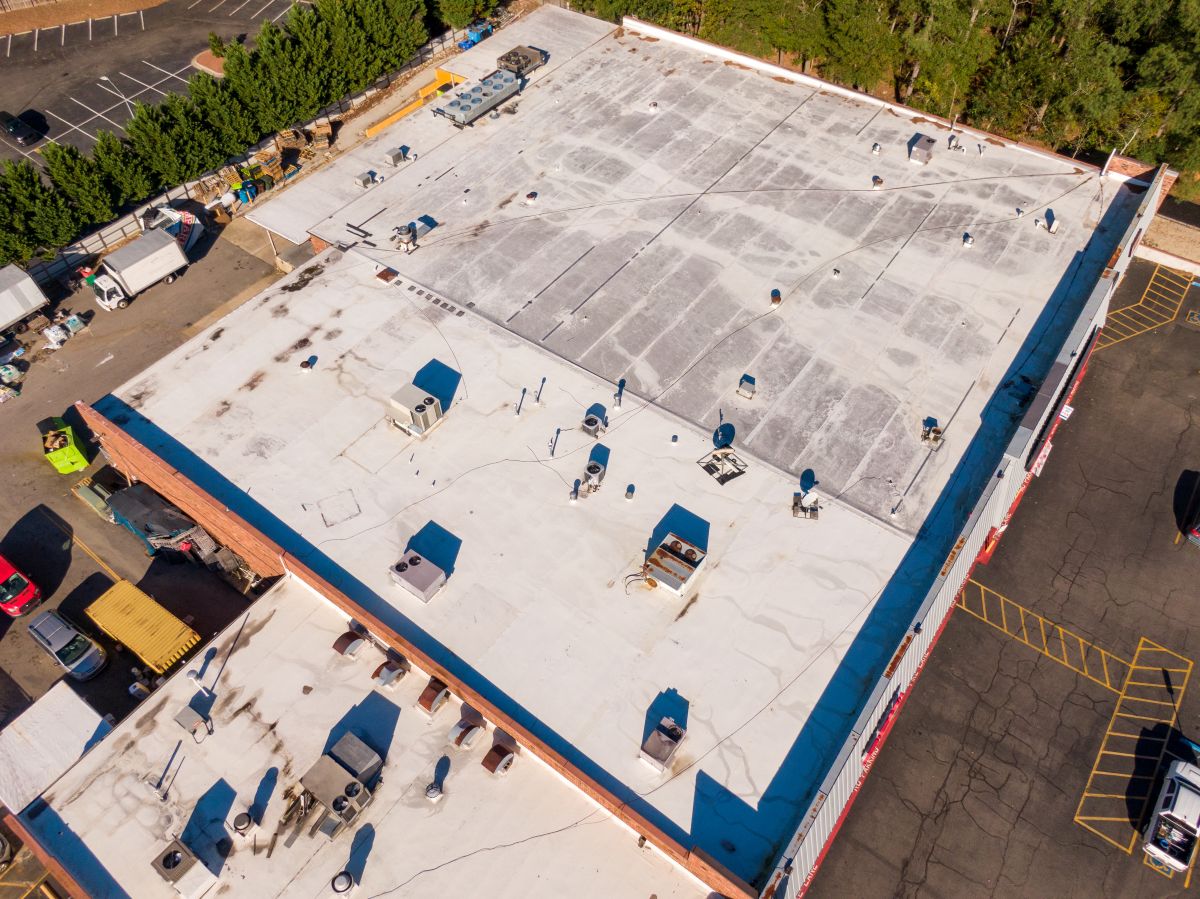
Detecting a leak on a commercial building is fundamentally different from finding one on a residential roof. On a steep-slope residential roof, water typically enters close to where it appears on the ceiling below. On a commercial flat or low-slope roof, water can travel horizontally for significant distances through the insulation layer before it shows up as a water stain or drip inside the building.
This disconnect between entry point and visible damage is what makes commercial roof leak detection a specialized skill. By the time moisture appears on interior finishes in New Haven, IN and surrounding areas, the leak may have been active for weeks or months. The longer moisture remains trapped in the roof assembly, the more insulation loses its R-value, the more the underlying structure deteriorates, and the higher the eventual repair costs climb. Early detection is the single most effective way for commercial property owners to avoid costly repairs that compound over time.
- Hidden travel distance: Water entering through a membrane breach can wick laterally through wet insulation for 10, 20, or even 50 feet before showing up inside the building, making surface observation alone unreliable.
- Membrane complexity: Commercial roofing systems include multiple layers of waterproofing membranes, insulation, and underlayment, and a failure in any one of them can allow moisture to hide between layers for extended periods.
- Delayed interior symptoms: Water stains, peeling paint, and dripping water are late-stage signs of a leak that has already caused significant hidden damage to the roof assembly above.
- Business impact: An undetected leak on a commercial property risks damage to inventory, equipment, and interior finishes, and in severe cases can trigger business interruptions and insurance claims that far exceed the cost of the roof repair itself.
Understanding why commercial leaks behave differently is the first step toward appreciating why professional leak detection methods outperform a simple visual walkthrough.
5 Ways Professionals Locate Commercial Roof Leaks
Professional leak detection on commercial roofs goes well beyond walking the roof surface and looking for obvious damage. Local roofing contractors trained in commercial roofing use a combination of diagnostic tools and systematic methods to pinpoint moisture infiltration accurately. Here are the primary proven methods used in the field.
1. Infrared Thermography
Infrared scanning is one of the most effective non-invasive methods available for commercial roof leak detection. Wet insulation retains heat differently than dry insulation, and an infrared camera detects these temperature differences as color variations across the entire roof surface. Infrared scans are typically performed at dusk or after dark, when the roof has cooled and wet areas retain heat longer than surrounding dry sections, making the results especially clear.
- Works best on built-up roofing, modified bitumen, and single-ply membranes
- Can cover large roof areas quickly, making it cost-effective for big commercial properties
- Results provide a moisture map that guides targeted core sampling or seam repairs
2. Nuclear Moisture Scanning
Nuclear moisture meters use a low-level radioactive source to detect hydrogen atoms in water molecules trapped within the roof assembly. The device is rolled across the roof surface and registers elevated readings wherever moisture is present below. This method works through multiple layers of roofing material without requiring any cuts or penetrations, making it well-suited for occupied commercial buildings where disruption must be minimized.
- Particularly useful for identifying wet insulation beneath a visually intact membrane
- Can confirm findings from an infrared scan with a second, independent data point
- Non-destructive and leaves the roof surface undisturbed
3. Electronic Leak Detection (ELD)
Electronic leak detection uses electrical current to find breaches in a roofing membrane. There are two main variations: low-voltage ELD, which works on roofs with a conductive membrane or moisture barrier above a non-conductive layer, and high-voltage ELD, which works on dry roofing assemblies. When the circuit encounters a membrane breach, current flows through and triggers a localized alert, pinpointing the exact location of the defect in the roof membrane.
- Highly accurate for locating pinhole defects and seam failures not visible to the eye
- Especially effective on EPDM, TPO, and PVC single-ply membrane systems
- Results are precise enough to allow targeted repairs rather than broad membrane replacement
4. Core Sampling
When scanning methods indicate a zone of moisture but the leak source remains unclear, contractors take core samples by cutting small sections of the roof assembly. The extracted cores reveal which layers contain moisture, how deeply saturation has penetrated, and whether the underlying structure has been compromised. Core sampling is a destructive method but provides definitive data that scanning tools cannot always supply on their own.
- Samples are typically 4 to 6 inches in diameter and are patched immediately after extraction
- Results confirm whether wet insulation needs to be replaced or whether damage is limited to surface layers
- Core locations are chosen strategically based on prior scanning data to minimize the number of cuts needed
5. Visual and Physical Inspection
Even with advanced technology available, a thorough hands-on visual inspection remains a critical part of the process. Experienced roofing contractors know where commercial roofs fail most often: at seams, flashings, roof penetrations, drains, and parapet walls. A trained eye walking the surface systematically will catch membrane blistering, open laps, failed caulking, and standing water patterns that scanning tools may not flag.
- Inspectors check drain outlets for blockages that compromise proper drainage and accelerate membrane deterioration
- Flashing at HVAC units, skylights, and pipe penetrations are primary failure points that receive close attention
- Seam integrity is evaluated by probing with a tool to test adhesion and detect open edges
Professional leak detection combines these methods based on the roof type, the size of the building, and the nature of the suspected problem. No single method tells the whole story, which is why experienced contractors use them in combination. Property managers across New Haven, IN and surrounding areas benefit from working with roofing contractors who bring multiple detection tools to every assessment rather than relying on visual inspection alone.
What Makes Commercial Roofs Especially Vulnerable
Not all commercial roofs face the same risks, but certain design and material factors consistently create conditions where leaks develop and go undetected. Understanding these vulnerabilities helps building owners and property owners know where to focus their maintenance attention.
Flat and Low-Slope Geometry
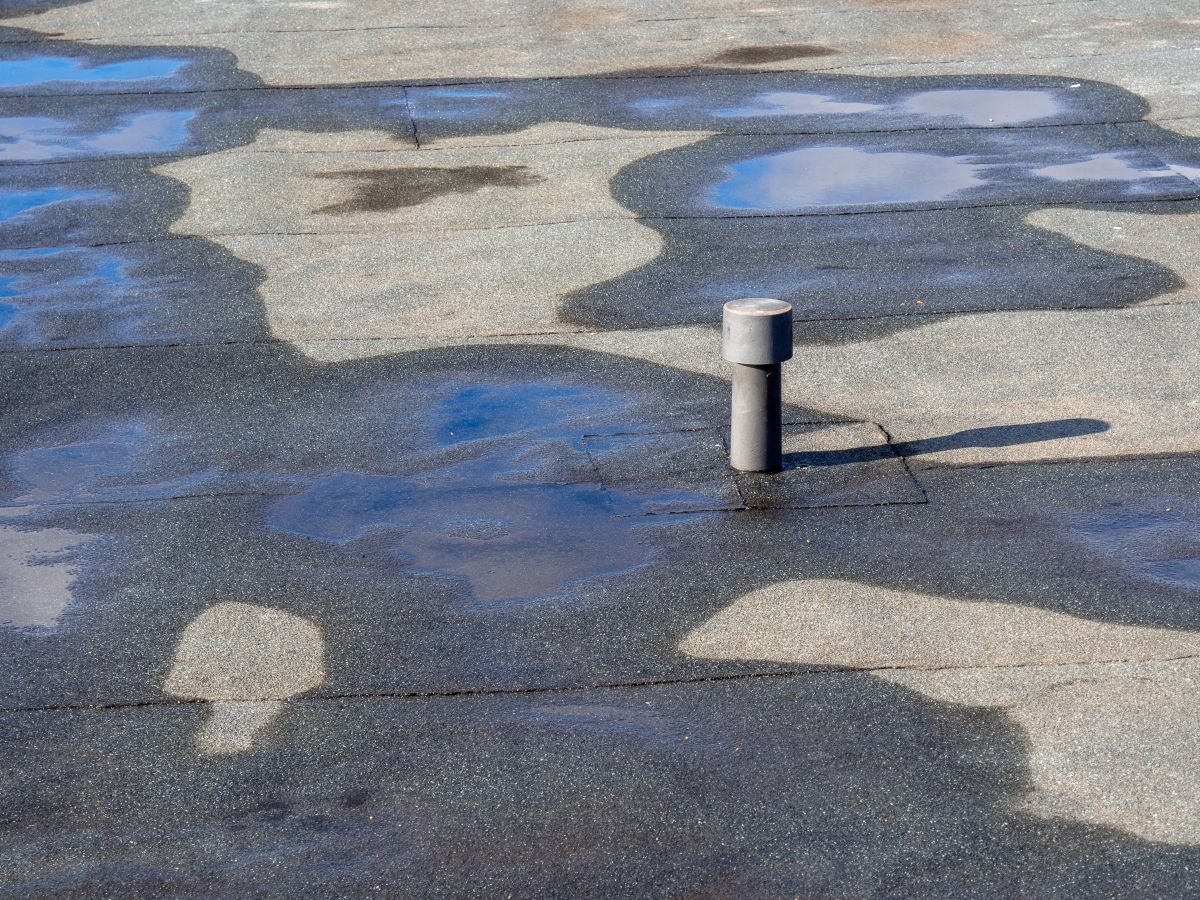
The geometry of most commercial roofs creates drainage challenges that residential roofs rarely deal with. Water does not shed quickly on a low-slope roof, and any deficiency in proper drainage results in ponding that accelerates membrane degradation. Standing water adds weight to the structure, softens adhesives, and works its way through any existing membrane weakness over time.
Aging Membrane Systems
Most commercial roofing systems have a functional lifespan of 15 to 25 years, depending on the material and maintenance history. As materials age, seams separate, UV degradation thins the roof membrane surface, and freeze-thaw cycles weaken areas around penetrations and flashings. Roofs in New Haven, IN and surrounding areas that are approaching or past the 20-year mark deserve more frequent regular roof inspections, not less.
Rooftop Equipment and Foot Traffic
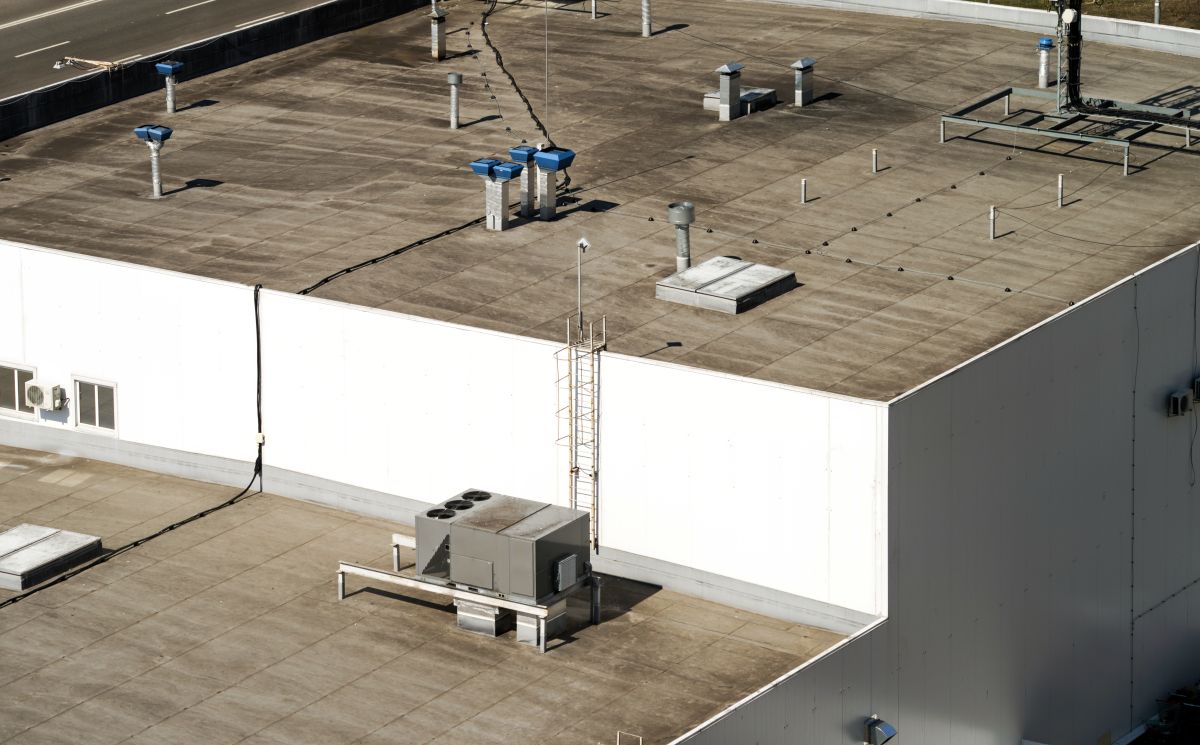
Commercial roofs carry HVAC units, exhaust fans, satellite equipment, and solar installations. Each piece of equipment represents a roof penetration through the membrane, and each one requires properly maintained flashing to remain watertight. Routine service visits from HVAC technicians and other tradespeople also introduce foot traffic that can crack aged membranes or disturb existing repairs, creating new entry points for water intrusion.
The combination of flat geometry, aging materials, and active rooftop use makes commercial properties significantly more prone to developing leaks that stay hidden until they reach an advanced stage. Regular inspections and proactive maintenance are the most reliable ways to keep roof integrity intact and control long-term repair costs.
Reading the Warning Signs That Inspection Is Overdue
Property managers and facility managers who know what to watch for are better positioned to call for a professional assessment before a small problem becomes a large one. Early detection at the earliest stages of a leak almost always results in simpler, less expensive timely repairs compared to addressing damage that has spread through multiple roof layers. The table below outlines the most common early warning signs and what they typically indicate.
| Warning Sign | Where It Appears | Likely Cause |
| Water stains or discoloration | Interior ceiling tiles or drywall | Active or past moisture infiltration |
| Bubbling or blistering membrane | Roof surface | Trapped moisture beneath the membrane |
| Separated or open seams | Roof surface at lap joints | Adhesive failure or thermal movement |
| Rust stains around drains | Roof surface near drains | Standing water and oxidizing metal |
| Mold or musty odor | Interior walls or ceilings | Long-term hidden moisture in the assembly |
| Sagging ceiling sections | Interior | Significant water accumulation above |
Spotting any of these visible signs in a commercial building in New Haven, IN and surrounding areas is a clear signal to schedule a professional leak detection assessment without delay. Waiting for the problem to become more obvious is rarely the less expensive option, and it often turns a manageable seam repair into a partial or full membrane replacement.
Let Maumee River Roofing Find the Leak Before It Finds You
A commercial roof leak that goes undetected for even one season can cause damage that far outweighs the cost of a proactive inspection. Roof leaks rarely show themselves until they have already done significant harm to the underlying structure and interior finishes.
Maumee River Roofing has the training, tools, and field experience to detect commercial roof leaks accurately and recommend targeted repairs that protect your investment without unnecessary replacement. If your commercial property has not had a professional assessment recently, do not wait for interior damage to make the decision for you. Reach out to our team and contact us today to schedule an inspection and get a clear picture of your roof’s condition.